
July 20, 2026


- Home
- Services
- Resume Example
- Resume Review
- Reverse Recruiting
- BlogJuly 19, 2026July 18, 2026July 17, 2026July 16, 2026July 15, 2026July 14, 2026July 13, 2026
- Contact Us
Canadian Resume Format Differences Explained

Get A Professional Resume Review

Get A Professional Resume Services

Get in Touch With Experienced Writer
Home » ATS Resume » Canadian Resume Format Differences Explained
Canadian Resume Format Differences Explained
Canada sits close enough to the US that many job seekers assume the resume conventions are identical. They're not. Canadian resumes share the same general philosophy as American ones — concise, outcome-focused, ATS-compatible — but differ on several points that matter enough to cost you interviews if you get them wrong.
This guide covers what makes a Canadian resume distinct, how it compares to US and UK formats, what Quebec applicants need to know specifically, and the formatting rules that apply across every Canadian province and industry.
Already have a resume? Run a free ATS scan to check how it scores for Canadian employer keyword filters.
Scan my resume free →The Canadian market
What makes the Canadian job market distinct
38M
people across ten provinces and three territories — with meaningfully different hiring cultures by region. Toronto and Vancouver mirror US tech hiring norms more than any other Canadian cities. Quebec applies French-language requirements. Alberta's energy sector has its own conventions. One resume rarely fits all of Canada equally.
At the national level, Canadian employers expect something that looks and feels closer to a US resume than a UK CV — concise, reverse-chronological, outcome-driven — but with some important local specifics around language, personal information, bilingualism, and the absence of certain US-style conventions (like aggressive salary negotiation framing or highly sales-driven summary language). Understanding those nuances is what separates a resume that reads as "local" from one that reads as imported.
Canada vs US vs UK
How the Canadian resume compares
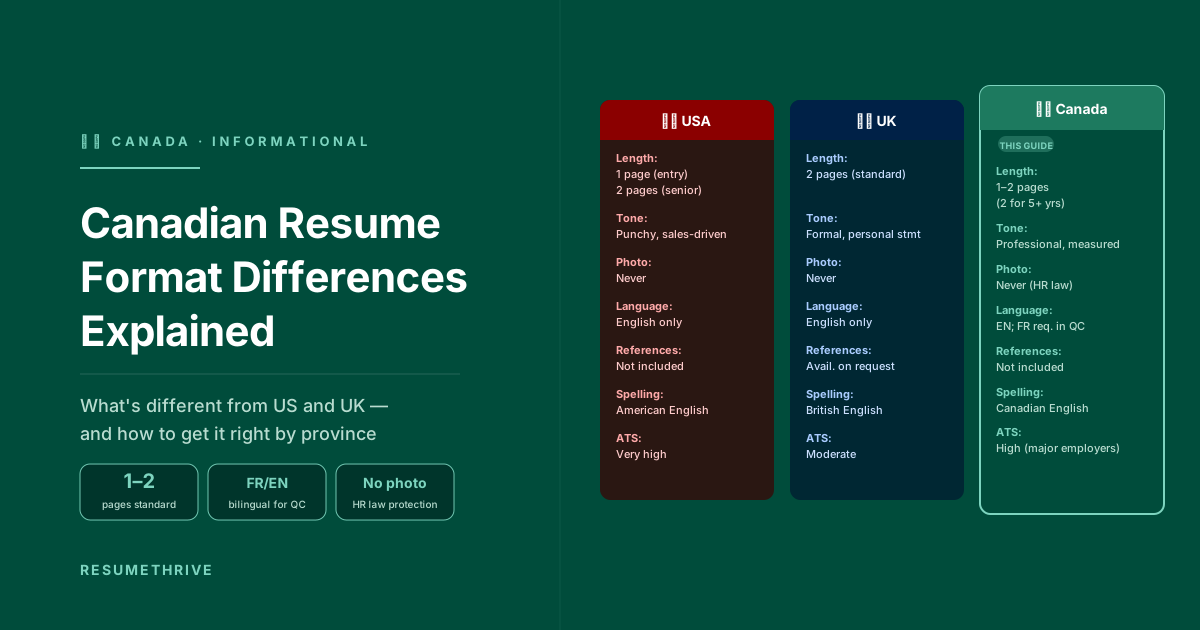
| Factor | 🇺🇸 USA | 🇬🇧 UK | 🇨🇦 Canada |
|---|---|---|---|
| Length | 1–2 pages | 2 pages | 1–2 pages (2 for 5+ yrs) |
| Document name | Resume | CV | Resume (or CV for academic) |
| Photo | Never | Never | Never |
| DOB / marital status | Never | Never | Never |
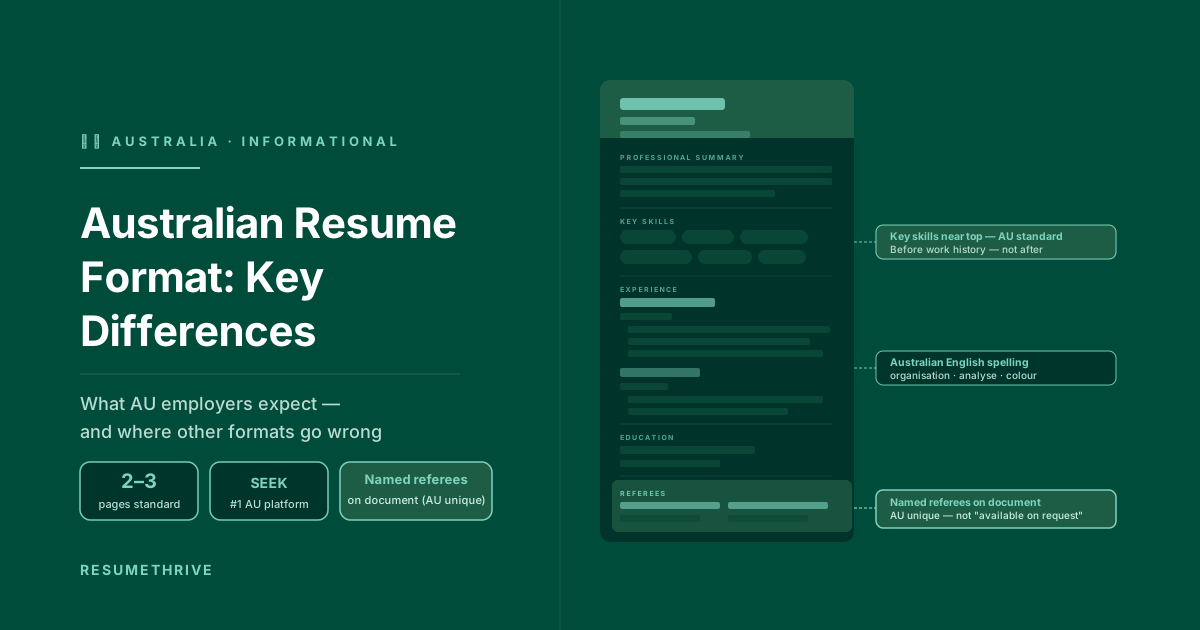
| References | Not included | "Available on request" | Not included (or available on request) |
| Language note | English only | English only | English; French required in Quebec |
| ATS prevalence | Very high | Moderate | High (major employers) |
| Summary style | Punchy / sales-driven | Formal personal statement | Professional, measured tone |
Structure
The Canadian resume structure — section by section
-
Contact information
Name, Canadian phone number, professional email, city and province (not full street address), and LinkedIn URL. Do not include: photo, date of birth, SIN, marital status, or nationality. Canadian human rights legislation prohibits employers from requesting this information, and including it unprompted raises red flags about your familiarity with local norms.
Contact block formatJane Smith | DOB: 15 March 1988 | Married | 123 Main St, Toronto, ON M5V 1A1 | +1 416 555 0100Jane Smith | Toronto, ON | +1 416 555 0100 | jane.smith@email.com | linkedin.com/in/janesmith -
Professional summary
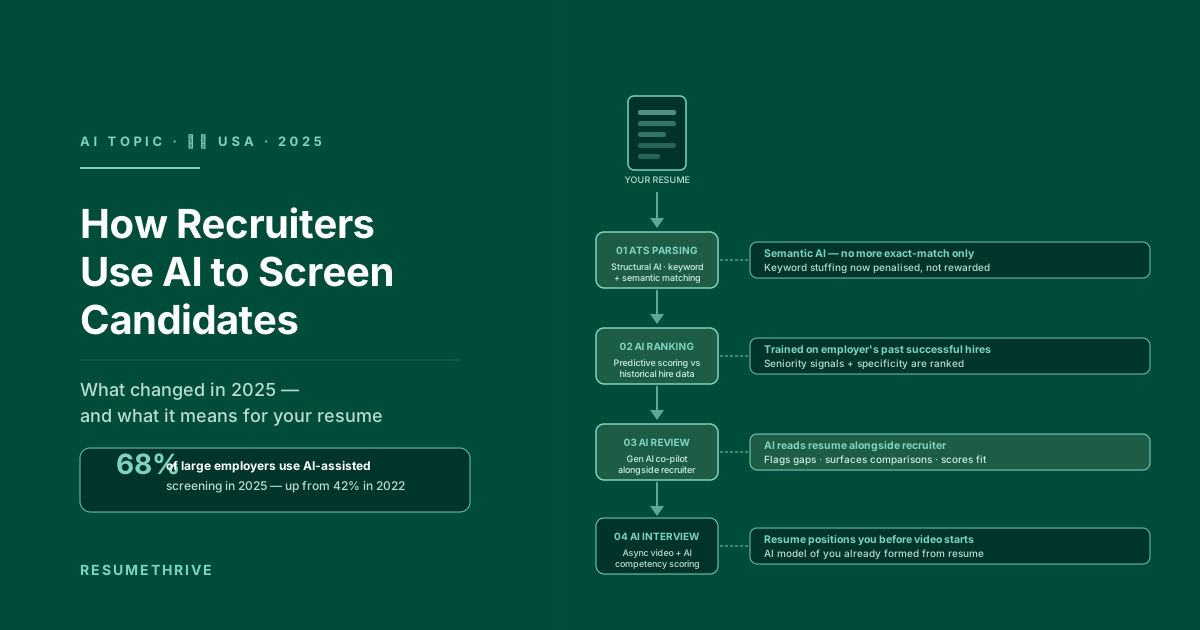
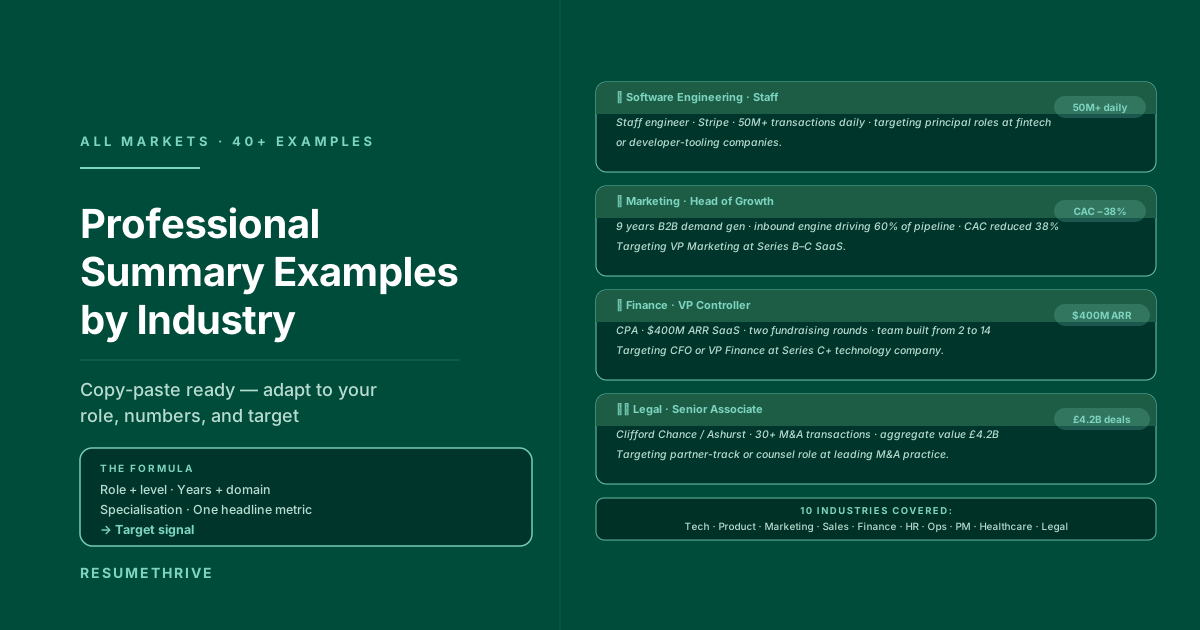
3–5 lines, written in third-person-implied style (no "I"). State your role, years of experience, domain, and one headline achievement or area of expertise. Canadian summaries tend to be more measured in tone than US ones — avoid the aggressive sales-pitch register that works in American markets, and lean toward professional credibility over personal branding language.
Summary tone comparisonRockstar marketing leader who crushes KPIs and drives explosive growth across channels. Passionate about disrupting the status quo. (US-register — reads as too aggressive for most Canadian employers)Senior marketing manager with 9 years of B2B demand generation experience across SaaS and financial services. Specialises in integrated campaign strategy and pipeline development, with a track record of reducing CAC by 30–40% across three consecutive roles. -
Core competencies / skills
A keyword-rich skills section directly below the summary. Use single-column or simple two-column formatting — no icons, no rating bars, no visual skill meters. Include both hard skills (tools, platforms, certifications) and transferable competencies (stakeholder management, bilingual communication, regulatory compliance). This section is critical for ATS matching at larger Canadian employers.
-
Professional experience
Reverse-chronological order. For each role: company name, city and province, your title, and dates (month and year). Bullet points should lead with action verbs and quantified outcomes. Use Canadian spelling throughout — "behaviour," "colour," "programme," "labour," "recognise" — and Canadian dollar figures where relevant (CAD or C$).
-
Education
Degree, institution name, city and province, and graduation year. If you studied outside Canada, include the Canadian equivalency note for professional designations where relevant. Canadian employers are familiar with international credentials but often appreciate a brief clarifying note for non-North-American institutions.
-
Certifications and professional affiliations
Canadian professional designations carry significant weight in regulated industries: CPA, P.Eng, PMP, CFA, CHRP, RN. List these prominently — either after education or as a separate section — with the issuing body and year. If you're a licenced professional, this section may matter more than your work history bullets.
Free ATS resume scanner
Check your resume against Canadian employer filters
Upload your resume and get an instant keyword gap report matched against the Canadian role you're targeting — in 60 seconds, no sign-up required.
Get my free ATS score → Free · No sign-up · Results in 60 secondsRegional differences
How the Canadian resume changes by province
🏙️ Ontario (Toronto)
- Largest job market; most US-adjacent norms
- High ATS usage at Bay Street finance firms
- Tech sector mirrors Silicon Valley conventions
- Government roles: bilingualism a strong asset
🌊 British Columbia (Vancouver)
- Strong tech, film, and natural resources sectors
- Slightly more relaxed professional tone than Ontario
- Asian-market experience often a differentiator
- ATS usage growing fast at enterprise employers
🥐 Quebec
- French-language resume required for most roles
- Bilingual (FR/EN) resume expected in Montreal
- French Canadian spelling conventions apply
- Bill 96 strengthens French-language requirements
🛢️ Alberta (Calgary/Edmonton)
- Energy, engineering, and construction dominate
- Technical certifications weigh heavily
- Safety tickets (WHMIS, H2S Alive) often required
- Less formal tone than eastern Canadian markets
Keywords
Canadian-specific keywords that matter
bilingual (EN/FR) CPA / P.Eng / PMP Canadian citizenship / PR security clearance WHMIS certified Indigenous relations PIPEDA compliance CAD revenue Government of Canada Crown corporation IFRS / ASPE CHRP / CHRL
Targeting a Canadian role? Run a free scan to check keyword coverage and formatting before you apply.
Scan my resume free →Common mistakes
Formatting mistakes that signal "not from here"
- ⚠️
Using US spelling throughout. "Color," "behavior," "program," "labor" — American spelling on a Canadian resume reads as an oversight. Use Canadian English spelling consistently, which follows British conventions for most words.
- ⚠️
Including personal information protected by Canadian human rights law. Photo, date of birth, SIN, marital status, or nationality. Canadian employers cannot legally request this — including it unprompted makes you look unfamiliar with the market.
- ⚠️
Listing USD figures without conversion for Canadian roles. "$4M revenue target" is ambiguous. "C$4.2M revenue target" is clear and signals local market awareness.
- ⚠️
No mention of work authorisation for non-PR/citizen applicants. Canadian employers are required to verify work eligibility. If you're on a work permit or open work visa, stating this clearly — "Open work permit holder; eligible to work for any Canadian employer" — removes a common early rejection reason.
- ⚠️
Submitting an English-only resume for Quebec roles. Quebec's Bill 96 has strengthened French-language requirements significantly since 2022. For most professional roles in Quebec, a French resume (or bilingual FR/EN version) is now expected, not optional.
Final check
Canadian resume checklist before you apply
Run through this before every Canadian application
- Document is 1–2 pages — 2 pages acceptable for 5+ years of experience
- Contact block: city and province only (no street address, no photo, no DOB)
- Canadian English spelling used throughout — behaviour, colour, programme, recognise
- Dollar figures use CAD or C$ notation for Canadian roles
- Professional designations (CPA, P.Eng, PMP, CHRP) listed prominently
- Work authorisation stated clearly if not a citizen or PR
- Quebec roles: French-language or bilingual version prepared
- No aggressive US-style sales language in the summary — measured professional tone
- Run through ATS scanner before submitting to any major employer
One last step
Make sure your resume is built for the Canadian market
Our free ATS scanner checks keyword coverage, formatting, and structure against the Canadian role you're targeting — so you know exactly what to fix before you apply.
Get my free ATS score → Free · No sign-up · Instant results