
July 20, 2026


- Home
- Services
- Resume Example
- Resume Review
- Reverse Recruiting
- BlogJuly 19, 2026July 18, 2026July 17, 2026July 16, 2026July 15, 2026July 14, 2026July 13, 2026
- Contact Us
Entry-Level Resume With No Experience: Complete Guide

Get A Professional Resume Review

Get A Professional Resume Services

Get in Touch With Experienced Writer
Home » ATS Resume » Entry-Level Resume With No Experience: Complete Guide
Entry-Level Resume With No Experience: Complete Guide
"I don't have any experience" is the most common reason people give for not knowing what to put on a resume. It's also, in most cases, not actually true. You have more than you think — it's just in places most people don't think to look.
This guide is for anyone writing their first professional resume: recent graduates, career starters, school leavers, or people re-entering the workforce. We'll cover exactly what to put on a resume when you have no formal work history, how to structure it, what recruiters actually look for at entry level, and how to get past ATS with zero job titles to your name.
Once you've built your resume, run a free ATS scan to check keyword coverage before you apply.
Scan my resume free →What recruitofficers actually look for
What entry-level recruiters are screening for
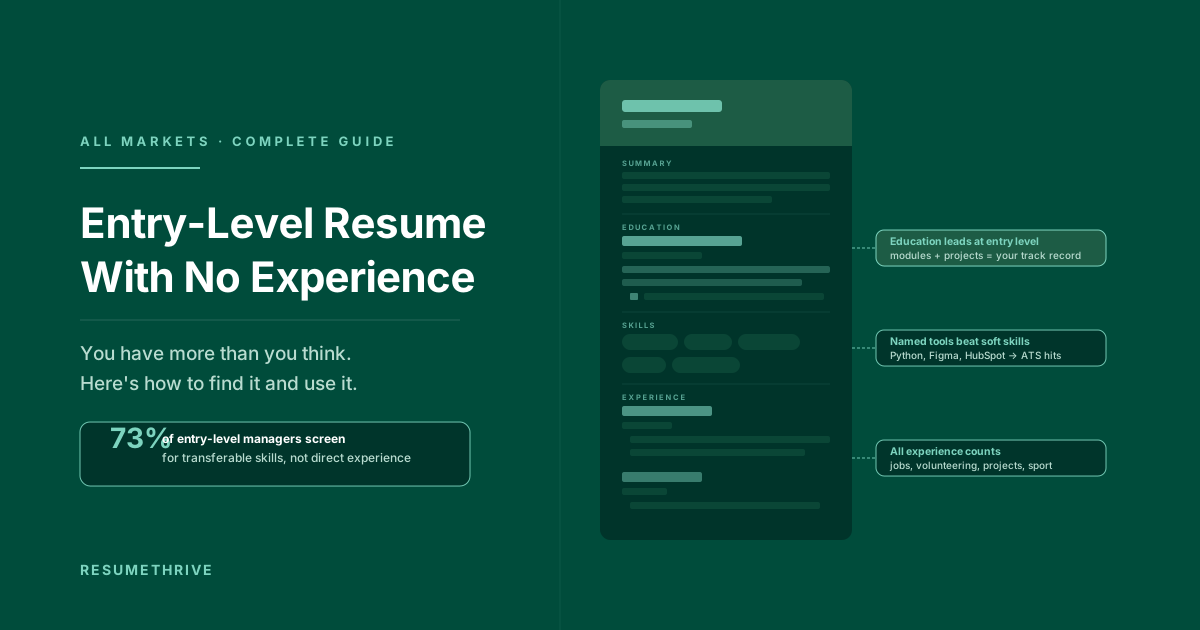
73%
of entry-level hiring managers say they primarily screen for transferable skills and attitude signals rather than direct experience. At the entry level, nobody expects a track record — they expect evidence of capability, coachability, and relevance to the role. Your job is to show that evidence, wherever it comes from.
The mistake most first-time resume writers make is treating missing job experience as a blank page. It isn't. Academic projects, internships, part-time work, volunteering, sports captaincies, community involvement, freelance work, side projects, and even relevant coursework all count as evidence of skill — once you describe them the right way.
What counts as experience
Where entry-level experience actually comes from
🎓 Academic and educational
- Final year projects and dissertations
- Group coursework and presentations
- Relevant modules and specialisations
- Academic awards and scholarships
- Study abroad programmes
- Research assistant roles
💼 Work-adjacent
- Internships and work placements
- Part-time or casual employment
- Freelance or contract work
- Work experience / shadowing
- Apprenticeships
- Family business involvement
🙋 Volunteering and community
- Charity or non-profit roles
- Event organisation and coordination
- Mentoring or tutoring
- Community group leadership
- Campus society roles
- Religious or cultural organisation roles
🛠️ Projects and self-directed
- Personal or portfolio projects
- GitHub repos or open source contributions
- Blogs, newsletters, or creative work
- Apps, websites, or tools built independently
- Sports team leadership / captaincy
- Online courses with assessed outcomes
Resume structure
How to structure an entry-level resume
The key structural difference for entry-level candidates: education moves up. When you have limited work history, your degree, grades, relevant modules, and academic projects are your strongest evidence — so they sit near the top, not at the bottom. Here's the recommended order:
-
Contact information
Name, phone, professional email address, city, and LinkedIn URL. If you have a portfolio, GitHub, or personal website relevant to the role — include it here. At entry level, a GitHub profile or portfolio can carry significant weight for technical and creative roles.
-
Professional summary (3–4 lines)
A targeted statement of what you're studying or have studied, what you're good at, and what you're looking for. Don't write "looking for an opportunity to grow" — every candidate says that. State your strongest skill or academic credential, name the type of role you're targeting, and include one specific signal of capability. Write it in implied first-person (no "I").
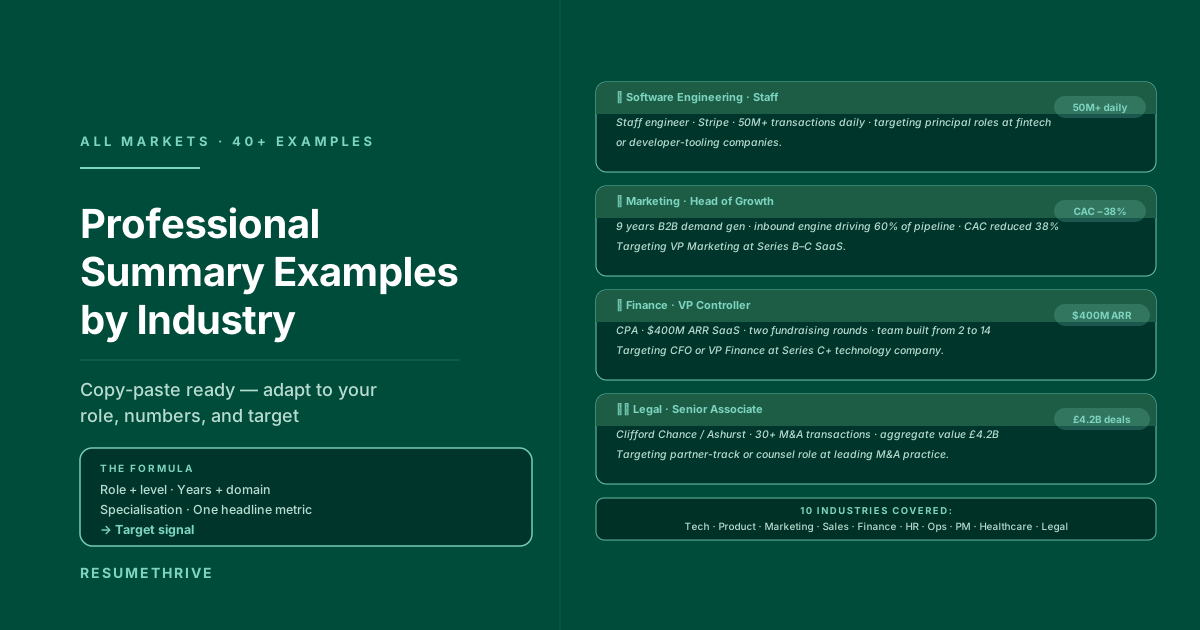
Entry-level summary rewritesRecent graduate seeking an entry-level position where I can apply my skills and grow professionally in a dynamic environment.Recent marketing graduate (First Class, University of Manchester) with hands-on experience running paid social campaigns for two student society events, achieving 3× ticket sales targets. Targeting a junior digital marketing role in e-commerce or DTC brands.Hard-working computer science student looking for an internship or graduate role in software development.Final-year Computer Science student (University of Edinburgh, GPA 3.8) with two internships in Python backend development. Built and deployed a real-time bus tracking app as a final year project; 400+ active users. Targeting graduate software engineering roles in fintech or developer tooling. -
Education
Degree title, institution, expected or actual graduation year, and grade/GPA where strong. Below the core degree line, add a "Relevant Modules" or "Key Projects" sub-section — this is where you surface the specific skills and subject areas that make you relevant to the role. Don't just list your degree title and move on: the detail underneath it is where you make your case.
Education section — adding detailBSc Marketing, University of Leeds, 2024BSc Marketing (2:1), University of Leeds, June 2024
Relevant modules: Consumer Behaviour · Digital Marketing Strategy · Marketing Analytics · Brand Management
Final year project: Developed a content strategy and social media audit for a local SME; implemented recommendations that increased Instagram engagement by 62% over 8 weeks. -
Skills
A keyword-matched skills section directly below education. Include tools, platforms, and technical skills you've used in any context — coursework, personal projects, internships, or self-study. Named tools (Excel, Python, Figma, HubSpot, Canva, SQL) carry more ATS weight than abstract competencies ("communication skills," "team player").
Skills section — specific vs vagueCommunication · Teamwork · Microsoft Office · Problem solving · Attention to detailPython · SQL · Excel (pivot tables, VLOOKUP) · Tableau · Google Analytics · Meta Ads Manager · Canva · Figma (basic) · HubSpot (CRM) · Agile / Scrum -
Experience (work, volunteering, and projects)
Use a single "Experience" section that combines part-time work, internships, volunteering, and significant projects. Each entry should have a title, organisation or context, dates, and 2–3 bullet points that describe what you did and — wherever possible — what resulted. The key shift: describe the impact, not the activity.
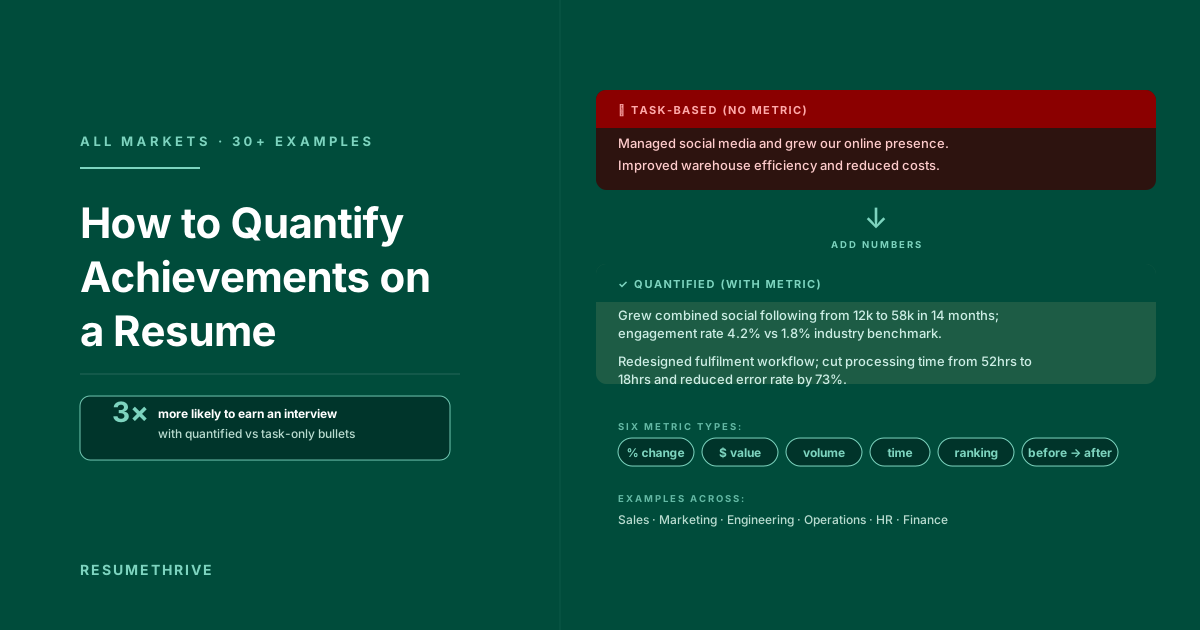
Experience bullet rewritesWorked as a barista at Costa Coffee, serving customers and making drinks.Served 100+ customers daily during peak shifts; trained 3 new team members on product knowledge and service standards; maintained upsell conversion rate consistently above store average.Volunteered at a local charity helping with social media.Managed Instagram and Facebook accounts for a 300-member local charity; grew combined following by 45% in 4 months through weekly content scheduling and engagement campaigns. -
Certifications and additional training
Any short courses, online certifications, or professional development relevant to the target role. Google Analytics, HubSpot certifications, LinkedIn Learning courses, Coursera specialisations, coding bootcamps — these all belong here. Include the issuing platform and completion year, and only include certifications that are actually relevant to the role you're targeting.
Free ATS resume scanner
Check your entry-level resume against ATS filters
Upload your resume and get an instant keyword gap report — matched against the entry-level role you're targeting. Free, no sign-up, 60 seconds.
Get my free ATS score → Free · No sign-up · Results in 60 secondsATS and keywords
Getting past ATS with no job titles
Entry-level candidates face a specific ATS challenge: most keyword-matching systems are tuned to match job titles and years of experience. Without either, you need to front-load your skills section and education detail with the exact terminology that appears in the job description.
High-value entry-level keywords by field:
Python / SQL / Java Google Analytics HubSpot Excel / Tableau Agile / Scrum Figma / Adobe CC project management data analysis stakeholder communication content creation customer service GitHub Salesforce copywriting
The most important rule: use the exact phrasing from the job description, not synonyms. If the job says "data analysis" and you write "analysing data," that's a keyword miss. Mirror their language precisely.
Built your first resume? Check it matches the job description keywords before you hit apply.
Scan my resume free →Common mistakes
What kills entry-level resume performance
- ⚠️
A generic objective statement. "I am a motivated individual seeking an opportunity to develop my skills in a fast-paced environment" appears on hundreds of thousands of entry-level resumes. It adds no information and takes up prime real estate. Replace it with a targeted 3–4 line summary.
- ⚠️
Describing activities instead of outcomes. "Helped with social media" is an activity. "Grew the account's reach by 45% in four months" is an outcome. Even at entry level, every bullet should aim for a result — or at least a scale indicator.
- ⚠️
Soft skills as the primary content. "Hard-working, reliable, and a great communicator" tells a recruiter nothing measurable. These claims need evidence behind them — if you're a great communicator, show it by describing a situation where communication produced a result.
- ⚠️
Leaving out non-traditional experience. Part-time retail work, sports captaincy, charity volunteering, and personal projects are all valid resume entries at entry level. Leaving these off because they "don't count" creates a blank page when those same entries could demonstrate leadership, work ethic, or technical skill.
- ⚠️
Sending a generic resume to every application. The quickest win on an entry-level job search is tailoring your resume — specifically the summary and skills section — to each job description. Even 15 minutes of tailoring per application meaningfully improves ATS match rates.
Final check
Entry-level resume checklist
Before you submit
- Targeted summary states your degree/field, strongest skill, and target role — not a generic objective
- Education section includes relevant modules, GPA (if strong), and at least one project with an outcome
- Skills section lists specific named tools and technologies — not abstract soft skills
- Every bullet describes what you did and what resulted — no activity-only descriptions
- Non-traditional experience included: part-time work, volunteering, projects, society roles
- Keywords mirror the exact phrasing from the target job description
- Document is 1 page — no exceptions at entry level
- No tables, columns, graphics, or icons — plain ATS-readable format
- Resume scanned against ATS before submitting
One last step
Make sure your first resume gets past the ATS filter
Our free scanner checks keyword coverage, formatting, and structure — so you know exactly what to fix before you apply for your first role.
Get my free ATS score → Free · No sign-up · Instant results