
July 20, 2026


- Home
- Services
- Resume Example
- Resume Review
- Reverse Recruiting
- BlogJuly 19, 2026July 18, 2026July 17, 2026July 16, 2026July 15, 2026July 14, 2026July 13, 2026
- Contact Us
Career Change Resume: How to Reframe Your Experience.

Get A Professional Resume Review

Get A Professional Resume Services

Get in Touch With Experienced Writer
Home » ATS Resume » Career Change Resume: How to Reframe Your Experience.
Career Change Resume: How to Reframe Your Experience.
Changing careers is one of the most common resume challenges out there — and one of the most mishandled. Most people either undersell their existing experience ("I've never done this before") or describe it in the jargon of their old industry, which signals "wrong world" to the new hiring manager before anyone reads the detail.
The truth is your background is an asset. You just need to know how to translate it. This guide covers exactly how to reframe your experience on a career change resume so it speaks directly to your new target role — with the structure, keyword strategy, and real before/after examples that work.
Before you reframe anything, find out how your current resume scores against ATS filters.
Scan my resume free →Why career change resumes fail
The real reason career change resumes get rejected
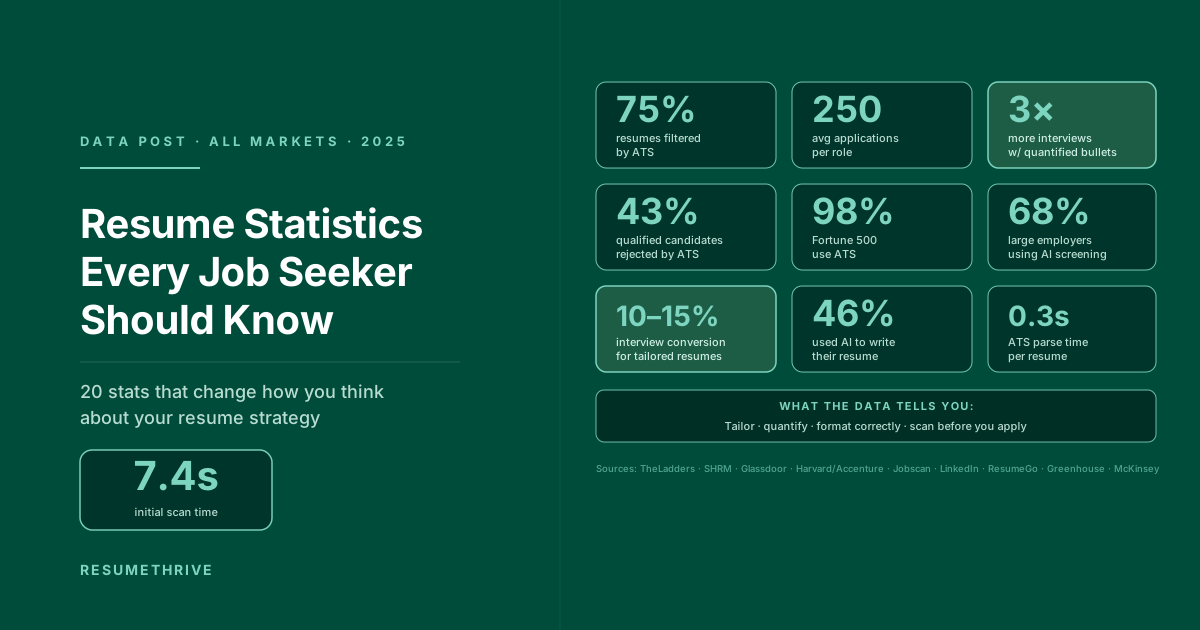
7sec
is roughly how long a hiring manager scans a resume for relevance. If your resume reads as though you're applying from a completely unrelated world — even when your skills genuinely transfer — it goes in the no pile before anyone reads the detail underneath.
It's rarely a lack of experience. It's a failure of translation. The three most common mistakes career changers make: leading with job titles instead of skills and outcomes, writing in the jargon of their old industry, and apologising for the change with phrases like "Although I don't have direct experience in X…" — a kill phrase that tells the reader to stop reading.
A career change resume is not a confession document. You are not explaining yourself — you are making a case. Every word should argue why you are the right person for this role, not document where you came from.
Resume structure
How to structure a career change resume
For most career changes, a hybrid (combination) format is the strongest choice. It leads with a skills summary and relevant accomplishments, then follows with your work history in reverse-chronological order — front-loading the most transferable content while keeping the credibility of a clear employment timeline.
- 01
Professional Summary — written entirely in the new industry's language
This is the most critical section on a career change resume. Frame your experience as directly relevant to the new role. Lead with your strongest transferable credential, then state your target clearly — never mention "transitioning from" or "looking to move into."
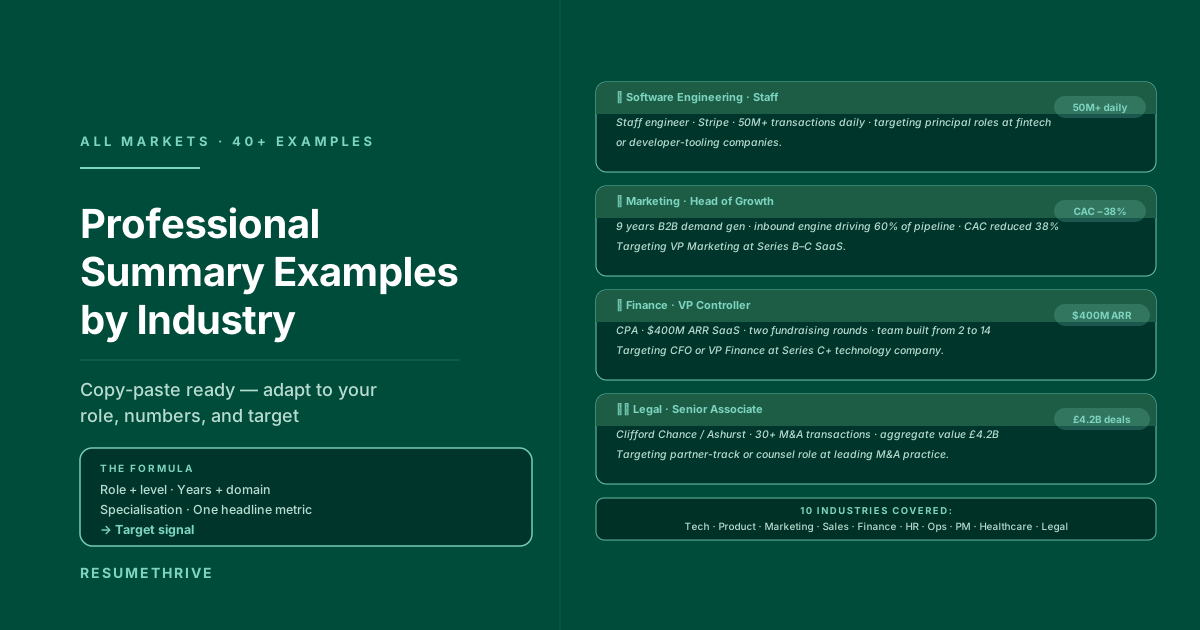
Summary rewrite — teacher → corporate trainerFormer secondary school teacher with 8 years of classroom experience looking to transition into corporate training. While I haven't worked in a corporate environment, I believe my skills would translate well.Learning and development professional with 8 years designing, delivering, and evaluating structured training programmes for groups of 25–120. Skilled in needs analysis, instructional design, and performance measurement, with a proven track record of improving learner outcomes by up to 22%. - 02
Core Skills — pulled up above work history
List 10–14 skills that match your target job description — hard skills, tools, and transferable competencies. This is keyword-rich territory that both ATS and human reviewers scan immediately, and placing it above your work history means it gets seen even on a fast skim.
- 03
Relevant Projects (optional but powerful)
If you've done freelance work, volunteered, completed a course, or built something relevant to your new field, create a short "Relevant Experience" or "Projects" section above your work history. This bridges the gap between what you've done and where you're going.
- 04
Work History — rewritten for transferable outcomes
Keep this in reverse-chronological order. For each role, rewrite the bullets to emphasise the skills that transfer, even when the job title doesn't. The golden rule: describe outcomes, not tasks. Tasks are industry-specific — outcomes speak to everyone.
Bullet rewritesManaged patient scheduling and clinical workflows for a 12-bed ward.Coordinated complex multi-stakeholder scheduling across a 12-person team, reducing operational delays by 34%.Processed invoices and reconciled accounts in Xero.Managed end-to-end financial operations including AP/AR reconciliation and real-time reporting across a £2M annual budget. - 05
Education and Certifications
List any qualifications relevant to your new field prominently — especially recent certifications, online courses, or bootcamps. These signal intentionality and commitment to the switch, and some ATS systems use them as a filter for career-changer candidates specifically.
Free ATS resume scanner
See if your resume reads "right industry"
Upload your resume and get an instant keyword gap report — matched against the role and industry you're targeting now, not the one you came from.
Get my free ATS score → Free · No sign-up · Results in 60 secondsKeywords and ATS
Closing the keyword gap without fabricating experience
Career change resumes face a double ATS challenge. You're not only competing with candidates who have direct experience — you're also working against an algorithm trained to reward exact keyword matches. If the job description says "project management" and your resume says "managed projects," that's a gap. Not a small one.
Mirror exact job description phrasing Dedicated skills section Named tools, not categories Certifications listed explicitly No tables, columns, or graphics Outcome language over task language
By industry
Common career change paths — and how to reframe each
🎖️ Military → Civilian
- "Led a fireteam" → "Managed a 12-person operational unit"
- Strip acronyms and rank structure
- Lead with leadership scale and outcomes
- Translate logistics into supply chain language
🎓 Teaching → Corporate / L&D
- "Differentiated instruction" → "adaptive training design"
- "Progress monitoring" → "performance tracking"
- Lead with curriculum and coaching skill
- Quantify learner outcome improvements
🏥 Healthcare → Operations
- Frame patient care as operational complexity
- Highlight compliance and resource allocation
- Emphasise pressure-tested coordination
- Drop clinical specialisation framing
💹 Finance → Tech / Product
- Lead with analytical and modelling skill
- Surface any process improvement projects
- SQL, Excel, Python front and centre
- Frame forecasting as data fluency
Common mistakes
What gets career change resumes rejected
- ⚠️
Apologising for the switch. "Although I don't have direct experience in X…" tells the reader to stop reading. Make the case instead — don't open with the gap.
- ⚠️
Old-industry jargon throughout. Terms that make perfect sense in your previous field read as "wrong world" to a new hiring manager scanning fast. Translate everything.
- ⚠️
Creative formatting to compensate. Career changers often reach for graphics, tables, or columns to "stand out" — but ATS can't read them, and the resume gets filtered before a human ever sees the design.
- ⚠️
Leading with job titles instead of skills. Titles mean nothing across industries. A skills-first hybrid format gets your relevance in front of the reader before they hit an unfamiliar title.
- ⚠️
No bridge experience listed. Freelance work, courses, certifications, or volunteer projects relevant to the new field are often left off entirely — when they're some of the strongest evidence of genuine intent.
Rewritten your bullets? Run a free ATS scan to confirm your keyword coverage before you apply.
Scan my resume free →Cover letter
Should you explain the career change in your cover letter?
Yes — but briefly, and only once. Your cover letter is the one place where the career change narrative belongs. One short paragraph is all you need: why you're making the switch (positive, forward-facing framing), the specific transferable experience that makes you a strong candidate, and what you'll deliver in the new role.
What you should never write: "I know my background isn't the typical path for this role…" Instead: "My background in [previous field] has given me [specific transferable skill] that I'm bringing directly to [target role]." Confident, direct, relevant.
Final check
Career change resume checklist before you apply
Run through this before every application
- Summary written in the target industry's language — no "transitioning from" or "looking to move into"
- Skills section contains 10–14 keywords pulled directly from the target job description
- Work history bullets describe outcomes and transferable skills, not industry-specific tasks
- Relevant side projects, freelance work, or certifications included above main work history
- No tables, graphics, or columns — plain ATS-readable formatting
- Cover letter includes one confident paragraph on the career change, no apology language
- Run through ATS scanner before submitting
One last step
Check your career change resume against ATS in 60 seconds
Our free scanner checks keyword coverage, formatting, and how your resume scores against the role you're targeting now — before you apply.
Get my free ATS score → Free · No sign-up · Instant results