July 20, 2026


- Home
- Services
- Resume Example
- Resume Review
- Reverse Recruiting
- BlogJuly 19, 2026July 18, 2026July 17, 2026July 16, 2026July 15, 2026July 14, 2026July 13, 2026
- Contact Us
Resume Statistics Every Job Seeker Should Know in 2025

Get A Professional Resume Review

Get A Professional Resume Services

Get in Touch With Experienced Writer
Home » ATS Resume » Resume Statistics Every Job Seeker Should Know in 2025
Resume Statistics Every Job Seeker Should Know in 2025
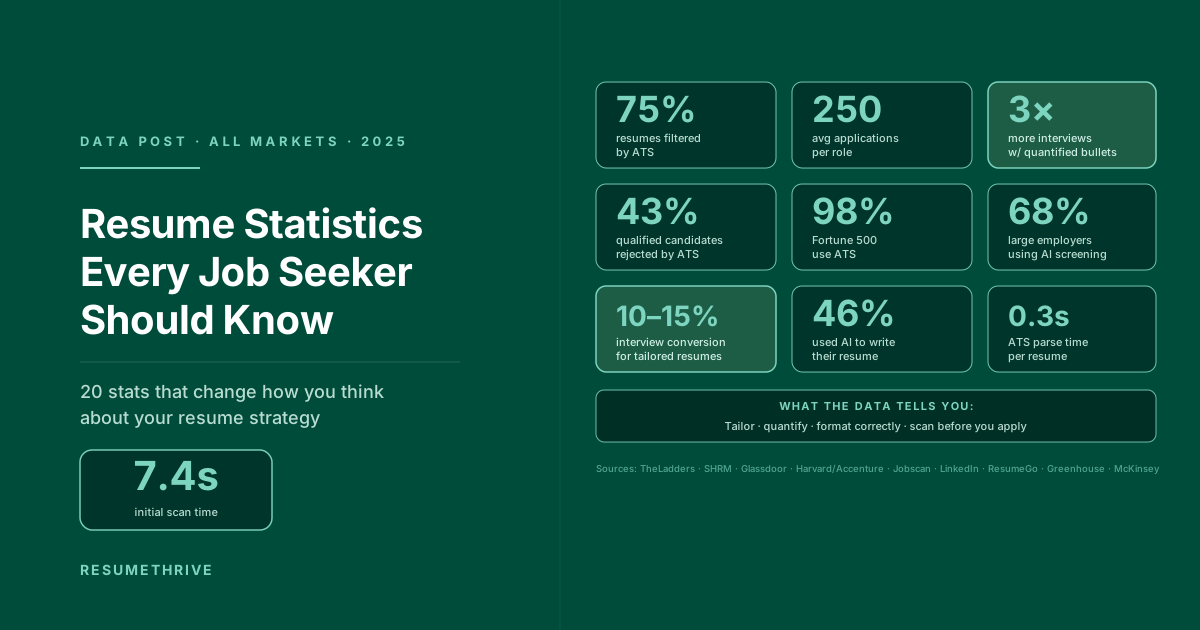
Numbers change how you think about a problem. Most job seekers write their resume based on intuition and guesswork — about how long it gets read, how many people they're competing with, and which changes actually move the needle. The data tells a different and more actionable story.
Here are the resume and hiring statistics that matter most in 2025 — what they mean, where they come from, and the practical implication of each one for your job search strategy.
Start with the data point that matters most for you right now — how your own resume scores.
Scan my resume free →The attention numbers
How recruiters actually read resumes
7.4s
average initial scan time — the most widely cited statistic in resume advice, from TheLadders' eye-tracking research. But the follow-up finding is less often quoted: resumes that passed the initial scan received an average of over 4 minutes of detailed review. The 7 seconds is a gate, not a verdict.
80%
Of scan time spent on 6 data points
Name, current role, current employer, dates, previous role, education. Everything else is invisible during the initial scan.
TheLadders eye-tracking study
4 min+
Extended review for shortlisted resumes
Candidates who pass the initial gate receive significantly longer attention. The detail matters — but only once you've passed.
TheLadders eye-tracking study
250
Average applications per corporate role
At mid-to-large companies. The number rises sharply for well-known brands and remote roles, often exceeding 400–500.
Glassdoor / LinkedIn hiring data
2%
Average resume-to-interview conversion rate
Across all job categories. Top performers and tailored applications reach 10–15%. Generic bulk applications often fall below 1%.
Jobscan / Greenhouse benchmarks
The ATS numbers
How many resumes ATS filters out
75%
Of resumes rejected before human review
At large employers using ATS, approximately three in four applications are filtered out before a recruiter sees them. Keyword mismatch and formatting errors are the primary causes.
Jobscan / SHRM research
98%
Of Fortune 500 companies use ATS
Near-universal adoption at enterprise level. Growing fast at mid-market employers, particularly through platforms like Greenhouse, Lever, and Workday.
Capterra / SHRM 2024
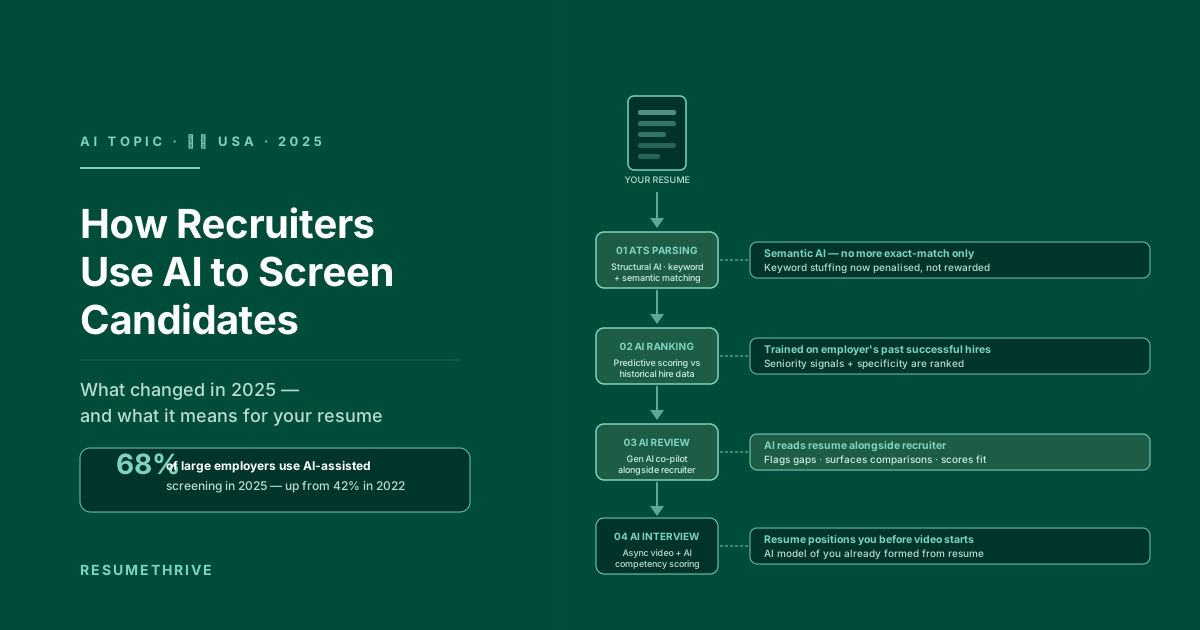
68%
Of large employers use AI-assisted screening
Up from 42% in 2022. AI now operates alongside and on top of traditional ATS, adding semantic scoring, candidate ranking, and predictive matching.
SHRM 2025 survey
43%
Of qualified candidates rejected by ATS
Nearly half of candidates who could do the job are filtered out before a human ever sees them — due to formatting, missing keywords, or structure issues.
Harvard Business School / Accenture
Free ATS resume scanner
Find out if you're in the 43%
Our free scanner checks keyword coverage, formatting, and structure against the ATS filters you're being screened by — in 60 seconds, no sign-up required.
Get my free ATS score → Free · No sign-up · Results in 60 secondsThe format numbers
What format and structure decisions actually change
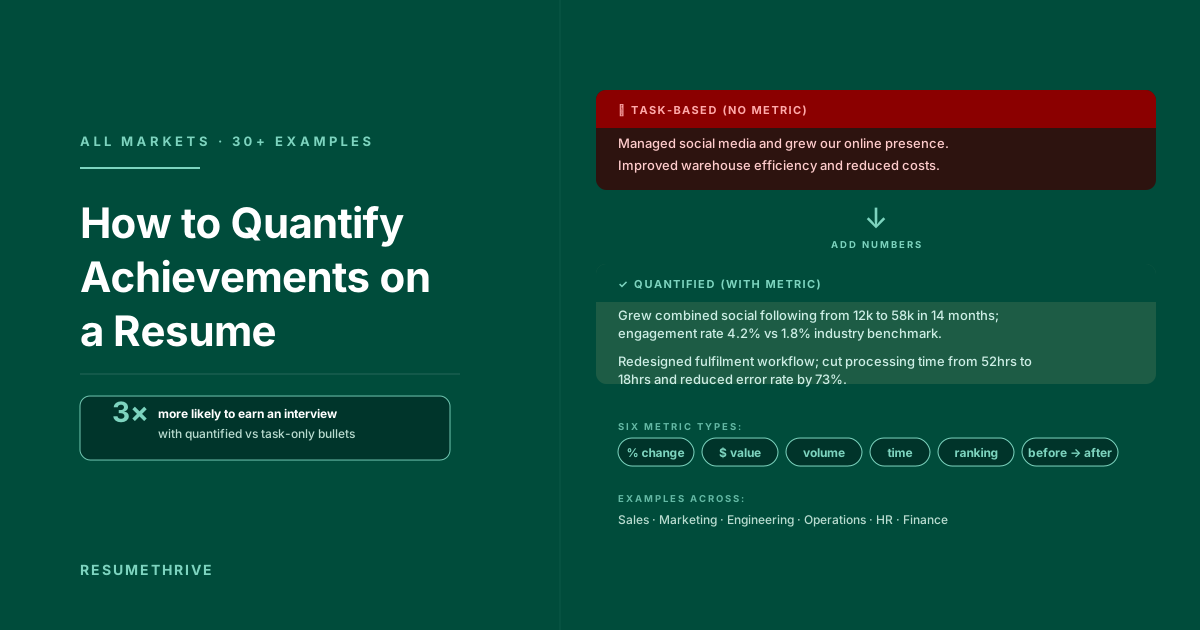
3×
More interview calls from quantified resumes
Resumes with specific, numbered achievements generate significantly more interview calls than those using only task-based descriptions.
Multiple hiring platform studies
40%
More recruiter messages on LinkedIn with complete About section
LinkedIn members with complete profiles — including a well-written About/summary section — receive significantly more inbound recruiter contact.
LinkedIn internal data
1–2
Page sweet spot for most roles
One page for candidates with under 5 years of experience. Two pages for 5+ years. Three or more pages reduces readthrough in most markets.
ResumeGo / Ladders research
6
Seconds before resume length affects readthrough
Resumes longer than 2 pages see measurably lower engagement after the first page. Every critical piece of content belongs on page one.
ResumeGo A/B study
The AI numbers
What candidates are doing with AI — and what's working
46%
Of job seekers used AI to help write their resume
Self-reported usage in 2025. Actual usage is likely higher, given the availability of free tools and the prevalence of ChatGPT in consumer workflows.
Multiple 2025 hiring platform surveys
62%
Of recruiters say they can identify AI-generated resumes
Pattern recognition, not software detection. Inflated verbs, vague impact claims, and uniform sentence structure are the primary tells.
Resume Worded / Jobscan survey 2025
3× faster
Resume writing with AI as a starting point
When used as a brainstorming partner rather than a final author, AI tools significantly reduce time-to-draft. The editing, however, still requires the candidate's real experience and numbers.
McKinsey Generative AI survey 2024
0.3s
Time for ATS to parse a submitted resume
Automated parsing is effectively instantaneous. The decisions ATS makes in under a second — based on formatting and keywords — determine whether a human ever reads your application.
Greenhouse / Workday API documentation
These stats only help if you act on them. Start with a free ATS scan of your resume.
Scan my resume free →What the data says to do
The five highest-leverage actions — backed by the numbers
-
Quantify at least 60% of your bullet points
The 3× interview call statistic comes directly from the shift to specific, numbered outcomes. This is the single highest-leverage change most resumes need. If you have 15 bullets and 12 are task descriptions, you're leaving most of your credibility on the table.
-
Get your critical content on page one
Given that readthrough drops sharply after page two, and given that recruiters spend 80% of their initial scan time above the fold, page one is where your career is won or lost. Your summary, strongest role, and headline achievements all belong there.
-
Tailor your resume per application
The gap between 2% average conversion and 10–15% top-performer conversion is almost entirely explained by tailoring. Resumes matched to the specific job posting — same keywords, same phrasing, same emphasis — dramatically outperform generic versions.
-
Use ATS-safe formatting, no exceptions
The 43% qualified-candidate rejection statistic is driven overwhelmingly by formatting errors. Multi-column layouts, tables, text boxes, and graphics are still causing avoidable rejection at every seniority level, in every market, every day.
-
Edit any AI-generated content before submitting
The 62% recruiter detection rate for AI-generated resumes is a ceiling that only applies to unedited AI output. AI-assisted resumes that have been rewritten with real numbers, specific context, and natural variation are indistinguishable from hand-written ones — and significantly faster to produce.
The full stat list
All 20 resume statistics for 2025 — at a glance
Quick-reference stats for job seekers and hiring professionals
- 7.4 seconds — average initial resume scan time (TheLadders)
- 4+ minutes — extended review for shortlisted candidates (TheLadders)
- 80% — recruiter scan time spent on just 6 data points (TheLadders)
- 250 — average applications per corporate role (Glassdoor)
- 400+ — average applications per role at tech companies (LinkedIn)
- 2% — average resume-to-interview conversion rate (Greenhouse)
- 10–15% — conversion rate for tailored, keyword-matched resumes (Jobscan)
- 75% — resumes rejected by ATS before human review (SHRM)
- 98% — Fortune 500 companies using ATS (Capterra)
- 68% — large employers using AI-assisted screening in 2025 (SHRM)
- 43% — qualified candidates rejected by ATS due to formatting/keywords (Harvard / Accenture)
- 3× — more interview calls from quantified vs. task-only resumes (multiple sources)
- 40% — more LinkedIn recruiter messages with complete About section (LinkedIn)
- 1–2 pages — optimal resume length for most professional roles (ResumeGo)
- 46% — job seekers who used AI to help write their resume (2025)
- 62% — recruiters who say they can identify AI-generated resumes (Jobscan 2025)
- 0.3 seconds — time for ATS to parse a submitted resume (Workday)
- 6 seconds — point at which long resumes see reduced readthrough (ResumeGo)
- 3× faster — AI-assisted resume writing vs. unassisted first draft (McKinsey)
- 60%+ — minimum percentage of bullets that should be quantified (ResumeThrive)
Put the data to work
Find out exactly where your resume stands
Every statistic on this page points to the same action: know your score before you apply. Our free ATS scanner tells you in 60 seconds what a recruiter's system will decide in 0.3.
Get my free ATS score → Free · No sign-up · Instant results