
July 20, 2026


- Home
- Services
- Resume Example
- Resume Review
- Reverse Recruiting
- BlogJuly 19, 2026July 18, 2026July 17, 2026July 16, 2026July 15, 2026July 14, 2026July 13, 2026
- Contact Us
UK CV Format: What British Employers Expect in 2025

Get A Professional Resume Review

Get A Professional Resume Services

Get in Touch With Experienced Writer
Home » ATS Resume » UK CV Format: What British Employers Expect in 2025
UK CV Format: What British Employers Expect in 2025
British employers have a clear and consistent set of expectations for CVs — and they notice when those expectations aren't met. A CV that follows US resume conventions, or that's one page, or that includes a photo, or that's written in American English, reads as unfamiliar with the UK market before a recruiter even reaches the content.
This guide covers everything British employers expect in 2025: the exact format and structure, what goes in and what stays out, how the conventions differ by sector, and the UK-specific rules that trip up candidates from other markets. Whether you're a UK native updating your CV or an international candidate applying to British employers for the first time, this is the standard you're being measured against.
Already have a CV? Run a free ATS scan to check keyword coverage and formatting before you apply.
Scan my CV free →The UK market
What makes the British job market distinct
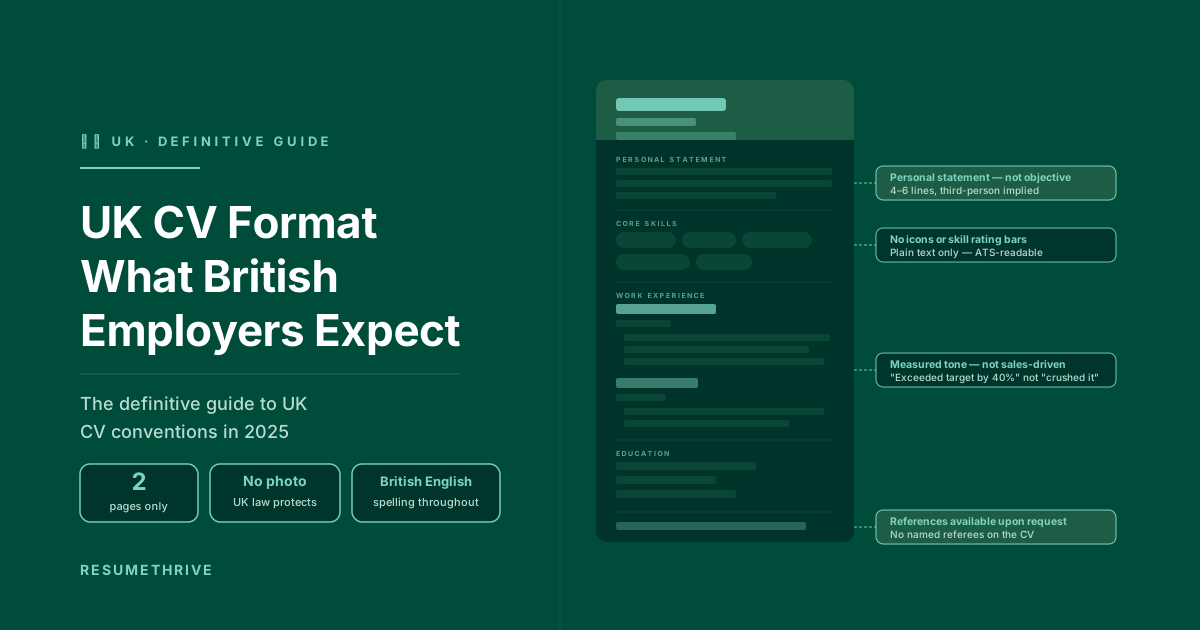
2 pages
is the single most important UK CV rule. Not one page, not three. Two pages is the standard expectation across virtually every industry and seniority level in the UK. A one-page CV reads as incomplete. A three-page CV reads as undisciplined. British hiring managers have been conditioned to expect exactly two pages, and deviating from this is one of the fastest ways to signal you don't understand the local market.
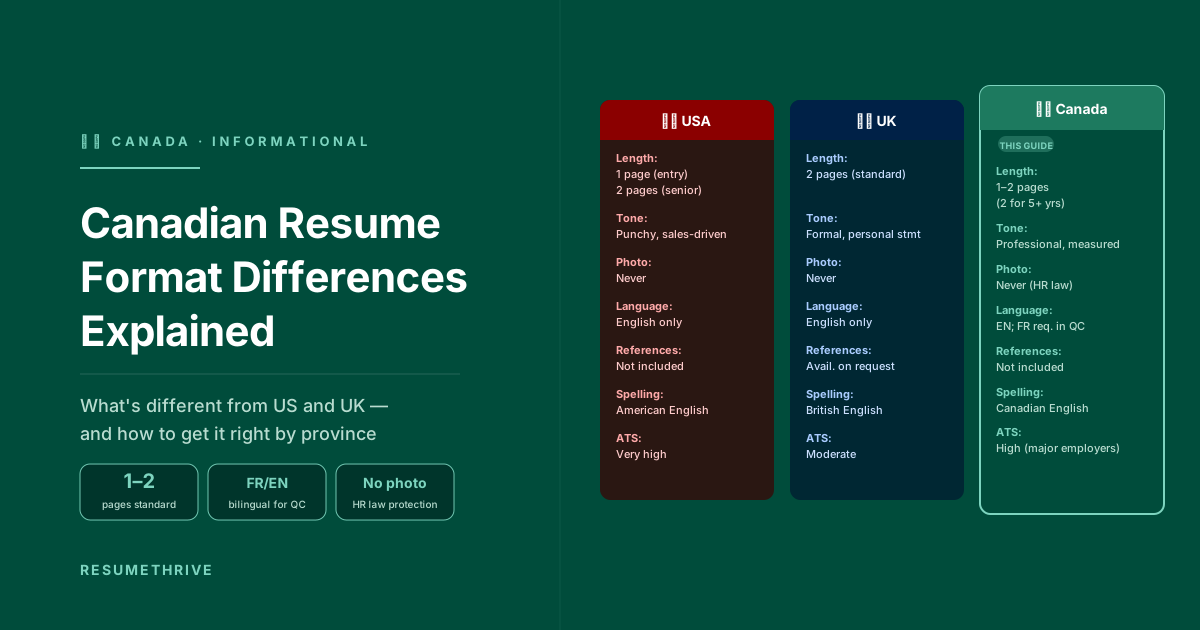
Beyond length, the UK CV differs from its US and Australian equivalents in tone, structure, and what's included. British CVs tend to be more formal and less sales-driven than American resumes. They include a personal statement rather than a professional summary. They end with a references line rather than a full referee list. And they follow British English spelling conventions throughout — a detail that matters more than most international candidates realise.
UK CV structure
Section by section — the standard UK CV format
-
Personal details
Name (large, at the top), phone number, professional email address, city and postcode (not full street address), and LinkedIn URL. That's it. Do not include: date of birth, marital status, nationality, NI number, or a photograph. UK employment law makes it illegal to discriminate on protected characteristics — including these details unprompted puts the employer in an awkward legal position and signals unfamiliarity with UK hiring norms.
Personal details — correct UK formatJames O'Brien | DOB: 12/06/1990 | British | Married | 47 Acacia Avenue, Islington, London N1 2BT | 07700 900123 | [photo attached]James O'Brien | London, N1 | 07700 900123 | james.obrien@email.co.uk | linkedin.com/in/jamesobrien -
Personal statement
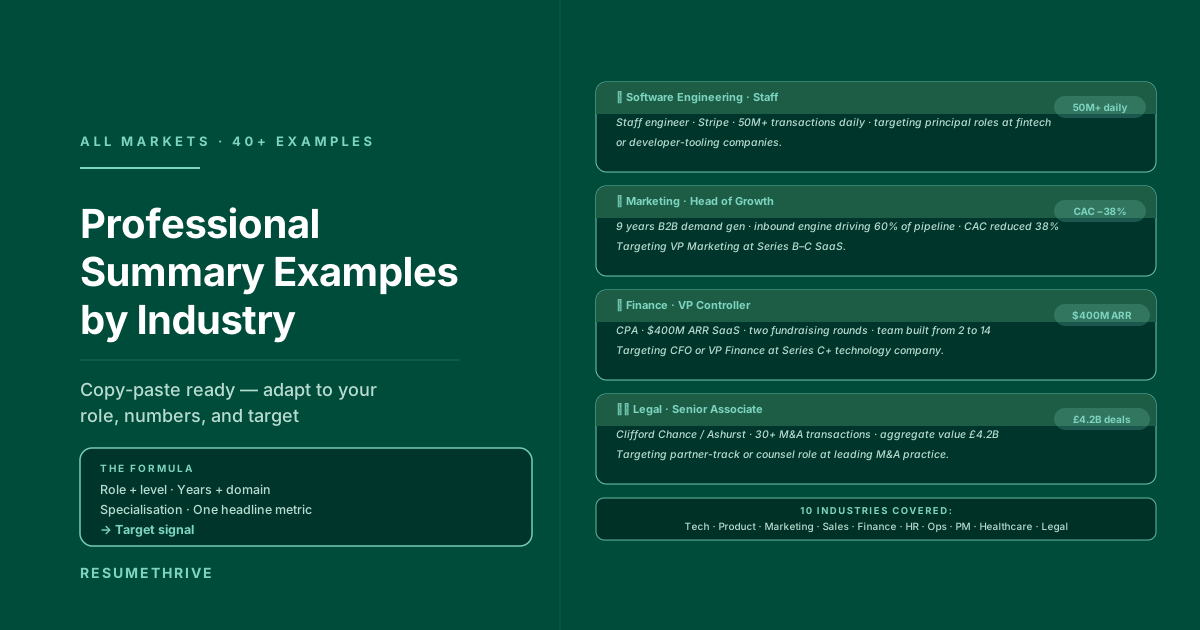
4–6 lines, written in third-person implied style (no "I"). This is the UK equivalent of a professional summary, but with a slightly different register — less punchy and sales-driven than a US resume summary, more considered and credibility-focused. State your role, years of experience, domain specialisation, and one strong achievement. It should answer: who are you professionally, what are you best at, and what are you looking for?
Personal statement rewriteResults-driven marketing professional with a passion for creating impactful campaigns and driving synergistic outcomes across dynamic cross-functional teams. (US register — too sales-driven for UK market)Senior marketing manager with nine years of B2B experience across professional services and SaaS. Specialises in demand generation and integrated campaign strategy, with a track record of increasing qualified pipeline by 35–50% across three consecutive roles. Currently seeking a head of marketing position in a scale-up or mid-market technology business. -
Core skills
A concise list of 8–12 skills and competencies, placed below the personal statement and above work experience. Use a simple single-row or two-column format — no icons, no skill ratings, no visual bars. Include both technical skills (tools, platforms, software) and professional competencies (stakeholder management, P&L ownership, regulatory compliance). Mirror the language of your target job descriptions for ATS alignment.
-
Work experience
Reverse-chronological order. For each role: job title, company name, location, and dates (month and year). 3–5 bullet points per role for recent positions, 1–2 for older ones. Bullets should lead with action verbs and quantified outcomes wherever possible. British CV bullets tend to be slightly more formal in tone than US resume bullets — avoid informal language, exclamation points, or overly casual phrasing.
Bullet point tone — US vs UK registerCrushed our Q3 targets by 40% and smashed the record for highest-ever quarterly ARR! (Too casual and hyperbolic for most UK employers)Exceeded Q3 revenue target by 40%, delivering the highest quarterly ARR in the company's five-year history. -
Education
Degree title, institution, graduation year, and grade (classification). UK degree classifications (First Class, 2:1, 2:2, Third) should be written out in full, not abbreviated. Include A-levels and equivalent qualifications for candidates within 5–7 years of graduation. For senior professionals with 15+ years of experience, education can be condensed to a single line — the degree matters less than the work history at that stage.
Education — UK formatBA (Hons) Economics, 2:1 — University of Bristol, 2016
A-levels: Economics (A), Mathematics (A), History (B) — St Paul's School, London, 2013 -
Additional sections (as relevant)
Professional memberships and chartered status (ACCA, CIMA, CIPD, RICS, CIM) — these are significant hiring signals in UK professional roles and should be listed prominently. Languages, where genuinely relevant. Publications or presentations for senior or academic roles. Voluntary work or board positions, if relevant to the target role.
-
References
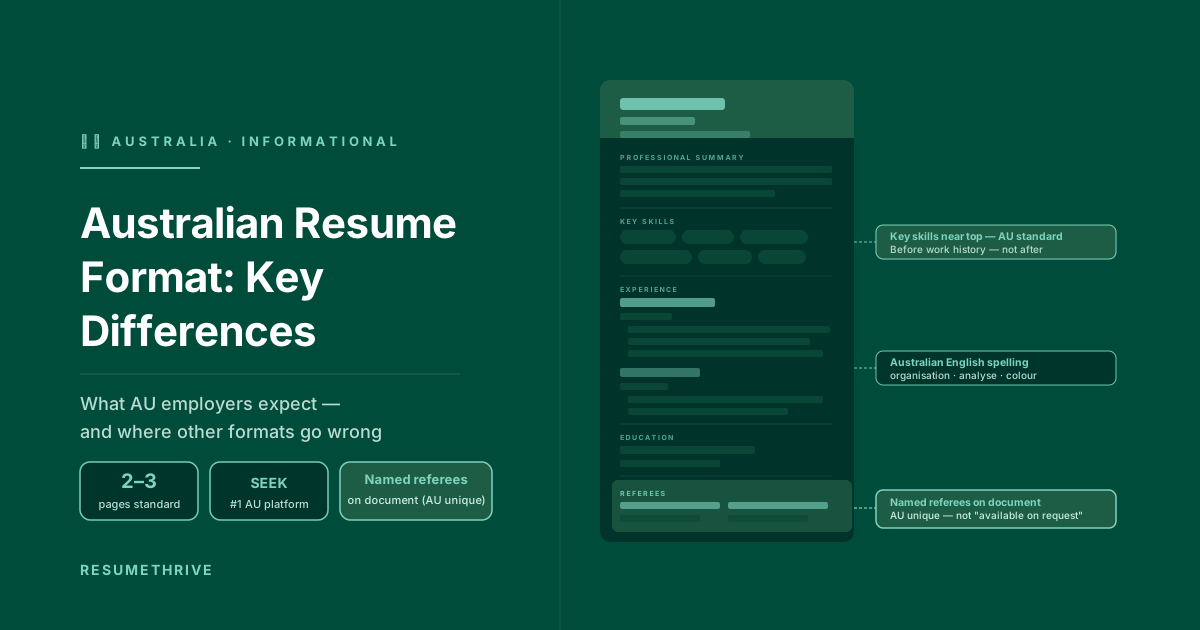
End the CV with a single line: "References available upon request." Do not list named referees on a UK CV — this is a UK-specific convention that differs from Australia and New Zealand (where named referees are expected on the document). British employers will request references separately at the offer stage.
Free ATS CV scanner
Check your CV against UK employer ATS filters
Upload your CV and get a keyword gap report matched against the UK role you're targeting — free, no sign-up, 60 seconds.
Get my free ATS score → Free · No sign-up · Results in 60 secondsUK spelling and language
British English — the conventions that matter
UK employers notice American spelling. It's a small thing, but on a document designed to demonstrate attention to detail, inconsistent or American-English spelling reads as careless. Set your spell-checker to British English before writing, and watch specifically for these common differences:
behaviour (not behavior) organisation (not organization) programme (not program) colour (not color) analyse (not analyze) recognise (not recognize) labour (not labor) licence (noun) / license (verb) centre (not center) practise (verb) / practice (noun)
By sector
How UK CV conventions change by industry
🏦 Finance and professional services
- Most formal register of any UK sector
- Chartered status (ACA, ACCA, CFA) listed prominently
- Deal sizes, AUM, and revenue figures expected
- Conservative formatting — no colour, clean serif or sans-serif
- Education and university still relevant at all levels
💻 Technology
- Slightly more relaxed tone; US influence is visible
- GitHub, portfolio, and side projects increasingly valued
- ATS usage high at larger tech employers
- Skills section carries more weight than in other sectors
- Remote/hybrid expectation often stated in CV objective
🏛️ Public sector and government
- Competency-based language aligned to Civil Service values
- STAR method (Situation, Task, Action, Result) often expected
- Equality, diversity, and inclusion language relevant
- Security clearance level stated where applicable (SC, DV)
- Application forms often replace CV — check carefully
🎨 Creative and media
- Portfolio link or showreel more important than CV design
- Slightly more personality in personal statement acceptable
- Named campaigns and client work signal credibility
- BAFTA, D&AD, Cannes Lions — awards listed prominently
- Agency vs in-house distinction matters to employers
Updated your UK CV? Run a free ATS scan to confirm keyword coverage before you apply.
Scan my CV free →Common mistakes
What gets UK CVs rejected
- ⚠️
Wrong length. One page reads as incomplete. Three pages reads as undisciplined. Two pages is the British standard — this is non-negotiable for the vast majority of UK roles.
- ⚠️
Including a photo. A photograph on a UK CV raises discrimination concerns and signals you don't understand the local market. UK employers are not permitted to request one, and including it unprompted is unusual enough to create a negative first impression.
- ⚠️
American English spelling throughout. "Organization," "behavior," "color," "analyze" — American spelling on a UK CV reads as an oversight. Set your spell-checker to British English and check the specific words listed above before submitting.
- ⚠️
US-style objective statement instead of personal statement. "I am seeking a challenging position where I can leverage my skills…" is a US convention. UK CVs use a personal statement that describes who you are and what you're best at — written in third-person implied, not first person.
- ⚠️
Listing named referees on the CV. This is an Australian and New Zealand convention, not a UK one. UK CVs end with "References available upon request" — named referees on the document look out of place and take up valuable page space.
- ⚠️
Overly casual or sales-driven language. "Rockstar," "crushed it," "game-changing" — this register works in some US markets but reads as unprofessional to most British hiring managers. Keep the tone credible and measured.
Final check
UK CV checklist before you apply
Run through this before every UK application
- Exactly 2 pages — not 1, not 3
- Personal details include city and postcode only — no photo, no DOB, no nationality
- Personal statement: 4–6 lines, third-person implied, role and achievement specific
- British English spelling throughout — behaviour, organisation, programme, analyse
- Bullet points lead with action verbs and quantified outcomes
- Professional memberships and chartered status listed prominently where relevant
- Degree classification written in full (First Class, 2:1 — not "1st" or "2-1")
- Ends with "References available upon request" — no named referees
- No tables, columns, or graphics — plain ATS-readable formatting
- Run through ATS scanner before submitting to any major employer
One last step
Make sure your CV is built for the UK market
Our free ATS scanner checks keyword coverage, formatting, and structure against the British role you're targeting — so you know exactly what to fix before you apply.
Get my free ATS score → Free · No sign-up · Instant results