July 20, 2026


- Home
- Services
- Resume Example
- Resume Review
- Reverse Recruiting
- BlogJuly 19, 2026July 18, 2026July 17, 2026July 16, 2026July 15, 2026July 14, 2026July 13, 2026
- Contact Us
Australian Resume Format: Key Differences Explained

Get A Professional Resume Review

Get A Professional Resume Services

Get in Touch With Experienced Writer
Home » ATS Resume » Australian Resume Format: Key Differences Explained
Australian Resume Format: Key Differences Explained
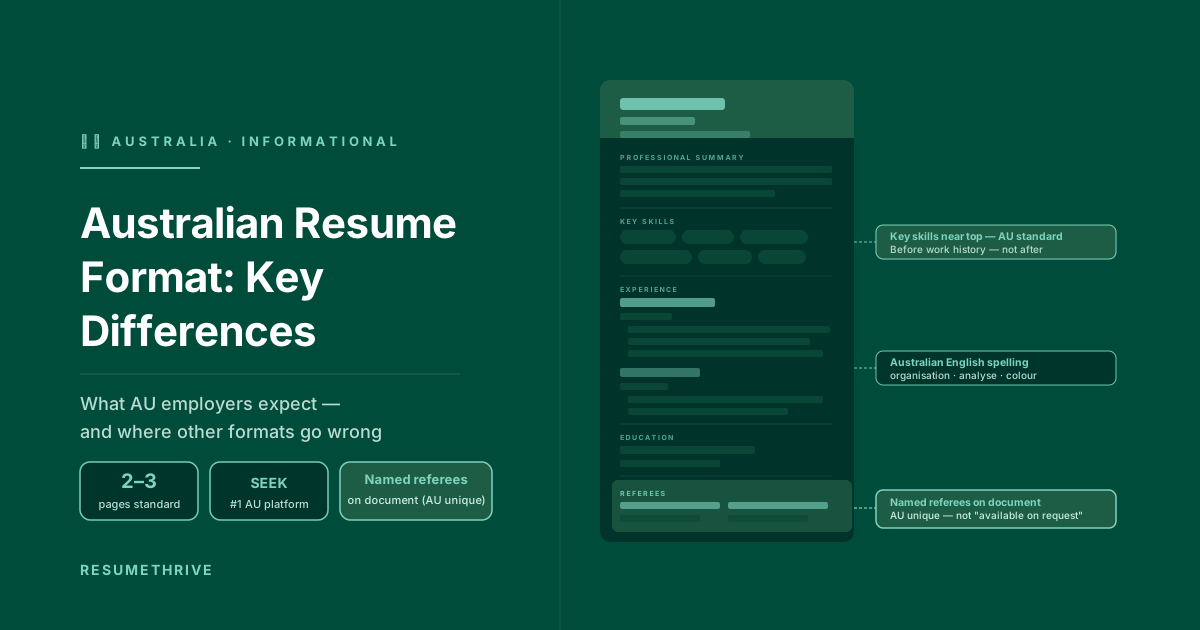
Australia sits between the US and UK in resume conventions — closer to American informality than British formality, but with its own distinct rules that catch people out. Named referees on the document. A key skills section near the top. A length that's longer than the US expects and similar to the UK. Miss these and your resume reads as imported.
This guide covers exactly what Australian employers expect in 2025: the right length, structure, and content for every section, what makes the Australian format different from US and UK documents, and the state-by-state nuances that matter in Sydney, Melbourne, Brisbane, and Perth.
Already have a resume? Run a free ATS scan to check how it scores for Australian employer filters.
Scan my resume free →The Australian market
What makes the Australian job market distinct
26M
people across six states and two territories — with meaningfully different labour markets by city. Sydney and Melbourne dominate professional and corporate hiring. Brisbane is growing fast in tech and infrastructure. Perth is driven by resources and engineering. One resume structure works nationally, but the industries and keywords you target vary significantly by location.
Australia uses SEEK as its dominant job platform — the vast majority of professional applications in Australia go through SEEK, which has its own ATS layer that resumes must pass before reaching a hiring manager. Understanding how SEEK parses and scores resumes is as important as understanding what the hiring manager wants to see.
Australia vs US vs UK
How the Australian resume compares
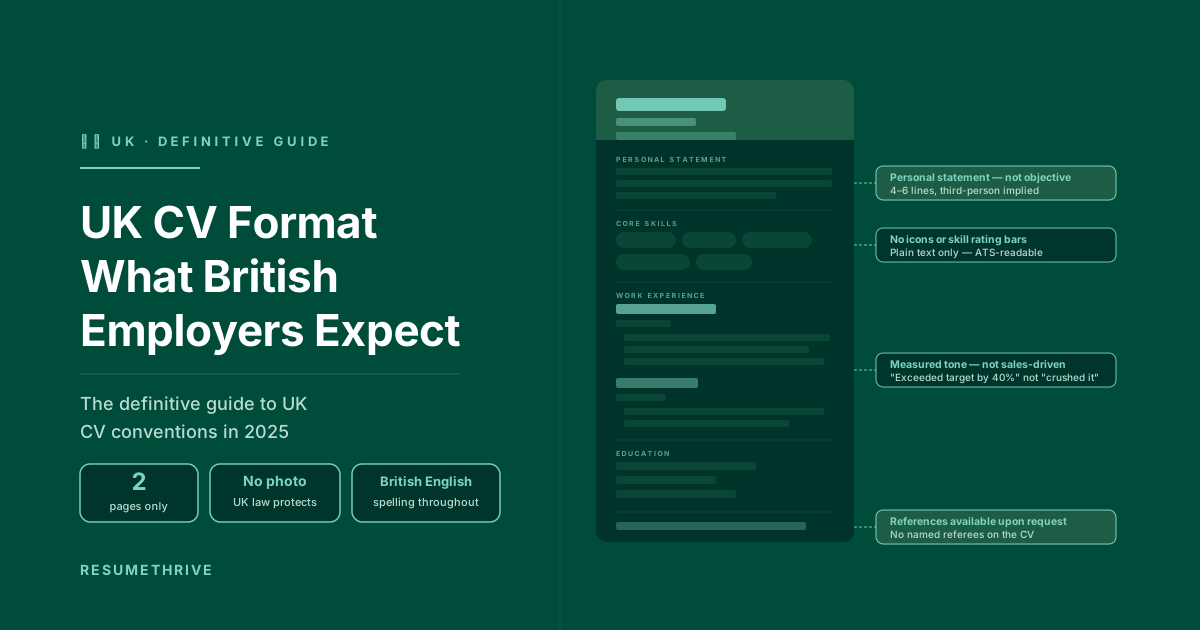
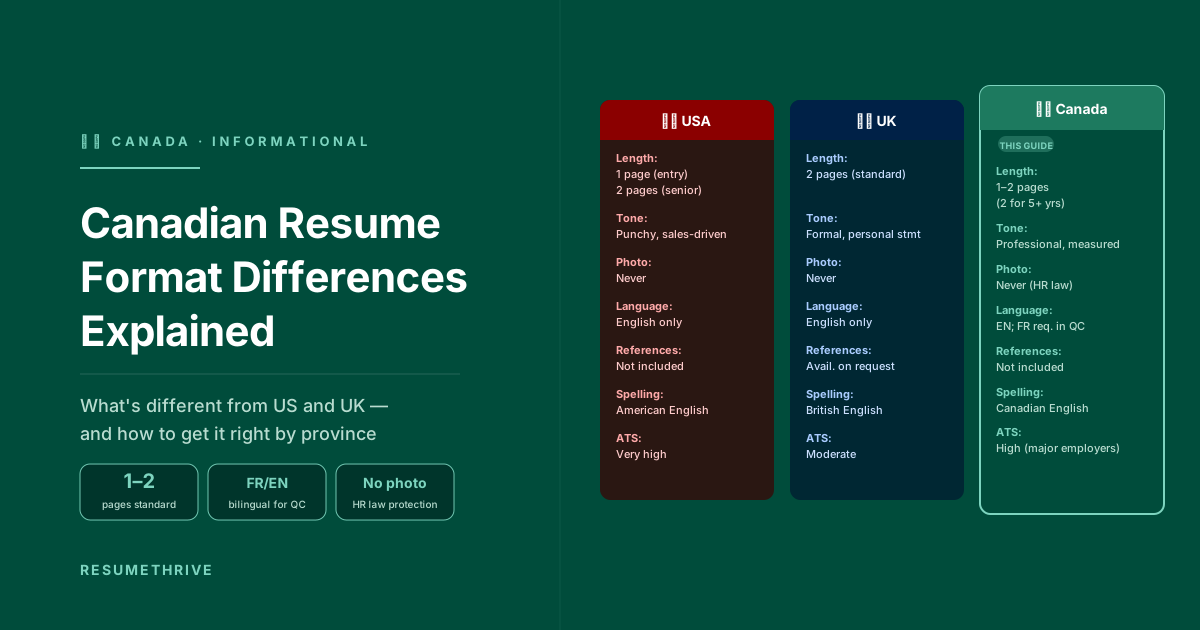
| Factor | 🇺🇸 USA | 🇬🇧 UK | 🇦🇺 Australia |
|---|---|---|---|
| Length | 1–2 pages | 2 pages | 2–3 pages |
| Document name | Resume | CV | Resume or CV (both used) |
| Photo | Never | Never | Never |
| Referees | Not included | "Available on request" | 2–3 named referees on document |
| Key skills section | Sometimes | Sometimes | Expected — near top |
| Cover letter | Often optional | Usually expected | Expected in most applications |
| ATS platform | Workday, Greenhouse | Various | SEEK dominates |
| Tone | Sales-driven | Formal | Professional, direct |
Section by section
The Australian resume — what goes where
-
Contact information
Name, Australian phone number, professional email address, suburb and state (not full street address), and LinkedIn URL. If you're not an Australian citizen or permanent resident, include your work rights status clearly — "Open work visa holder" or "Australian permanent resident" — to remove an early screening question. Do not include: photo, date of birth, or nationality.
Contact block — correct AU formatSarah Chen | Sydney NSW 2000 | +61 412 345 678 | DOB: 14/03/1991 | Nationality: ChineseSarah Chen | Sydney, NSW | +61 412 345 678 | sarah.chen@email.com.au | linkedin.com/in/sarahchen | Australian Permanent Resident -
Professional summary
3–5 lines summarising your role, experience level, industry domain, and a headline achievement. Australian summaries are direct and achievement-focused — less formal than a UK personal statement, but less sales-driven than a US resume summary. Write in third-person implied (no "I") and lead with your strongest credential.
Summary — Australian registerHighly motivated self-starter and passionate team player who thrives in fast-paced environments and is eager to contribute to organisational success. (Generic — no specifics)Senior project manager with 11 years of infrastructure and construction experience across Queensland and NSW. Specialises in large-scale government contracts, with a track record of delivering complex projects on time and under budget — including a $42M road upgrade completed 6 weeks ahead of schedule. -
Key skills
This section is more prominent in Australian resumes than in US or UK formats — it typically appears directly below the summary, before work history. List 10–14 skills and competencies that align with your target role. Use exact phrasing from SEEK job postings to maximise keyword matching. Include both technical skills (software, tools, certifications) and professional competencies (stakeholder engagement, budget management, project delivery).
-
Professional experience
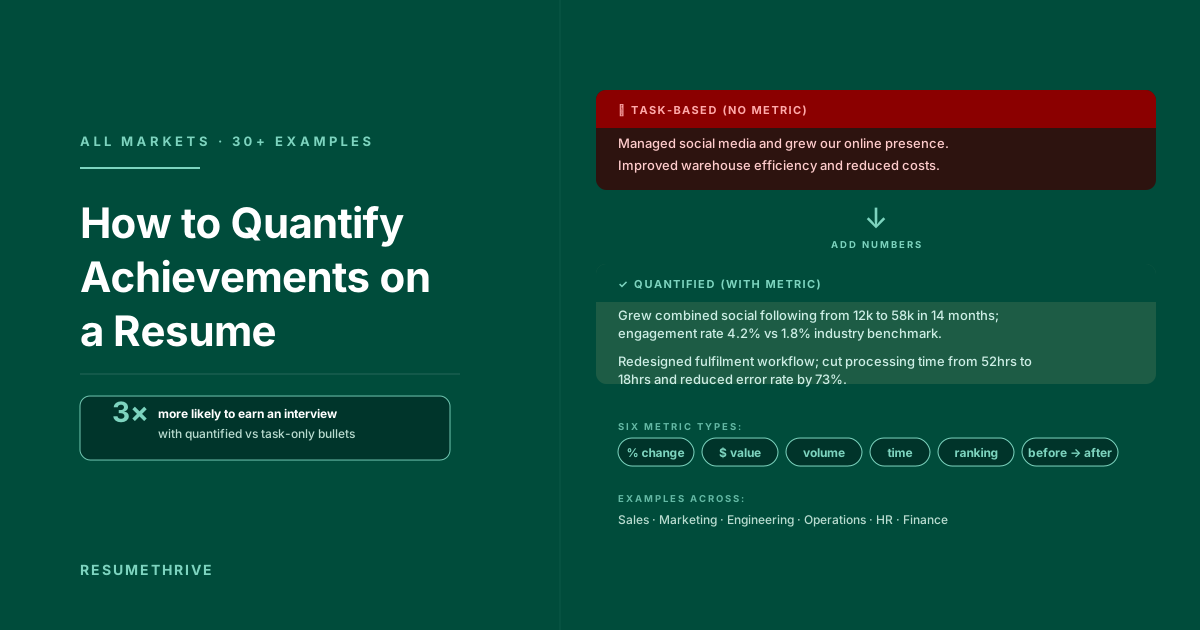
Reverse-chronological, with company name, location, title, and dates (month and year). 3–5 bullet points for recent roles, 1–2 for older ones. Australian bullets follow the same outcome-first, quantified approach as US resumes — lead with an action verb and include a measurable result wherever possible. Use Australian English spelling throughout.
Australian spelling checklistorganisation (not organization) · analyse (not analyze) · programme (not program) · labour (not labor) · colour (not color) · centre (not center) -
Education and qualifications
Degree, institution, state, and graduation year. Include your GPA if it's strong (above 3.5/4.0 or a Distinction average). For trade and technical roles, vocational qualifications (Cert III, Cert IV, Diploma) carry significant weight and should be listed prominently. White card, Working with Children Check, and other Australian compliance certifications should be listed if relevant to the role.
-
Professional memberships
Australian professional bodies carry real credibility with hiring managers: CPA Australia, CA ANZ, Engineers Australia, AIPM, AHRI, RICS, RACGP. If you hold membership — or are working toward it — list it clearly with the membership level and year. For regulated professions (medicine, law, engineering, nursing), registration with the relevant Australian body is a mandatory hiring filter, not an optional addition.
-
Referees
This is the section that surprises international candidates most: Australian resumes typically include 2–3 named referees at the end of the document, complete with their full name, title, organisation, phone number, and email address. "References available on request" is a UK convention — in Australia, most employers expect the details up front. Always ask your referees' permission before listing them.
Referees section formatDavid Park — General Manager, Lendlease Group
+61 2 9000 1234 | d.park@lendlease.com
Michelle Torres — Senior Project Director, Transport for NSW
+61 2 8765 4321 | m.torres@transport.nsw.gov.au
Free ATS resume scanner
Check your resume against SEEK and Australian employer filters
Upload your resume and get an instant keyword gap report matched against the Australian role you're targeting — free, no sign-up, 60 seconds.
Get my free ATS score → Free · No sign-up · Results in 60 secondsAustralian keywords
SEEK-specific and Australian keywords that matter
Australian citizen / PR
White card / Blue card
CPA Australia / CA ANZ
Engineers Australia
Working with Children Check
AUD revenue
AHPRA registration
AIPM
AHRI
Fair Work Act
WHS / OHS
NDIS
Xero / MYOB
SEEK profile complete
By state
How the Australian market varies by state
🏙️ Sydney (NSW)
- Finance, legal, and professional services dominate
- Most competitive job market in Australia
- Tech sector growing fast in CBD and Pyrmont
- Government and infrastructure roles in Parramatta
- ATS screening highest at large corporate employers
🏙️ Melbourne (VIC)
- Strong in health, education, and creative industries
- Most diverse industry mix of any Australian city
- State government a major employer
- Tech and startup scene growing in Cremorne
- Union membership more common — mention if relevant
☀️ Brisbane (QLD)
- Infrastructure boom ahead of 2032 Olympics
- Construction, engineering, and project management
- QLD Government health sector largest employer
- Trade and vocational qualifications highly valued
- SEEK usage even higher than national average
⛏️ Perth (WA)
- Resources, mining, and energy sector dominant
- FIFO (fly-in, fly-out) roles common — state willingness
- Strong demand for engineers and tradespeople
- WA-specific certifications (Mines Safety) relevant
- Salary expectations typically higher than east coast
Targeting an Australian role? Run a free ATS scan before you apply through SEEK.
Scan my resume free →Common mistakes
What gets Australian resumes rejected
-
⚠️
No referees section. This is the most common mistake international candidates make. Australian employers expect 2–3 named referees on the document. "References available on request" signals unfamiliarity with the local market.
-
⚠️
Too short. A 1-page resume reads as incomplete for any professional role in Australia. 2–3 pages is the standard — 2 pages for less experienced candidates, 3 pages for senior roles with 10+ years of experience.
-
⚠️
American English spelling. Australian employers use British English conventions. "Organization," "labor," "color," and "program" all read as careless on an Australian resume.
-
⚠️
No work rights statement for visa holders. If you're not an Australian citizen or permanent resident, employers need to know your eligibility to work. Not including this leads to early screening rejection — even for highly qualified candidates.
-
⚠️
No cover letter. Australian employers still expect cover letters for most professional roles. A resume submitted without one — especially for government or healthcare roles — signals incomplete effort.
-
⚠️
Missing Australian compliance certifications. White card for construction, AHPRA registration for health professionals, Working with Children Check for education roles — these aren't optional extras. Missing them from a relevant application is an automatic disqualifier in many sectors.
Final check
Australian resume checklist before you apply
Run through this before every Australian application
- Document is 2–3 pages (2 for less experienced, 3 for senior)
- Contact block: suburb and state only — no photo, no DOB, no nationality
- Work rights status stated clearly if not a citizen or PR
- Professional summary: 3–5 lines, direct and achievement-focused
- Key skills section appears near the top, above work history
- Australian English spelling throughout — organisation, analyse, programme
- Referees section at end: 2–3 named contacts with full details
- Australian compliance certifications included where relevant (white card, AHPRA, WWC)
- Cover letter prepared and tailored to the specific role
- Run through ATS scanner before submitting through SEEK or direct
One last step
Make sure your resume is built for the Australian market
Our free ATS scanner checks keyword coverage, formatting, and structure against the Australian role you're targeting — so you know exactly what to fix before you apply.
Get my free ATS score → Free · No sign-up · Instant results