July 20, 2026


- Home
- Services
- Resume Example
- Resume Review
- Reverse Recruiting
- BlogJuly 19, 2026July 18, 2026July 17, 2026July 16, 2026July 15, 2026July 14, 2026July 13, 2026
- Contact Us
One Page or Two? The Real Resume Length Answer in 2025

Get A Professional Resume Review

Get A Professional Resume Services

Get in Touch With Experienced Writer
Home » ATS Resume » One Page or Two? The Real Resume Length Answer in 2025
One Page or Two? The Real Resume Length Answer in 2025
One page or two? It's the most debated question in resume writing — and it gets a different answer depending on who you ask. Here's the actual answer, based on experience level, industry, and how your resume gets read.
The short answer: one page if you have under 10 years of experience, two pages if you have more. But like most things in job searching, the details matter. This guide breaks down exactly when each applies — and what to cut if your resume is the wrong length.
Not sure if your resume is formatted right? Get a free ATS scan and find out in 60 seconds.
Check my resume free →The quick answer
One page vs. two pages — at a glance
One page
Under 10 years
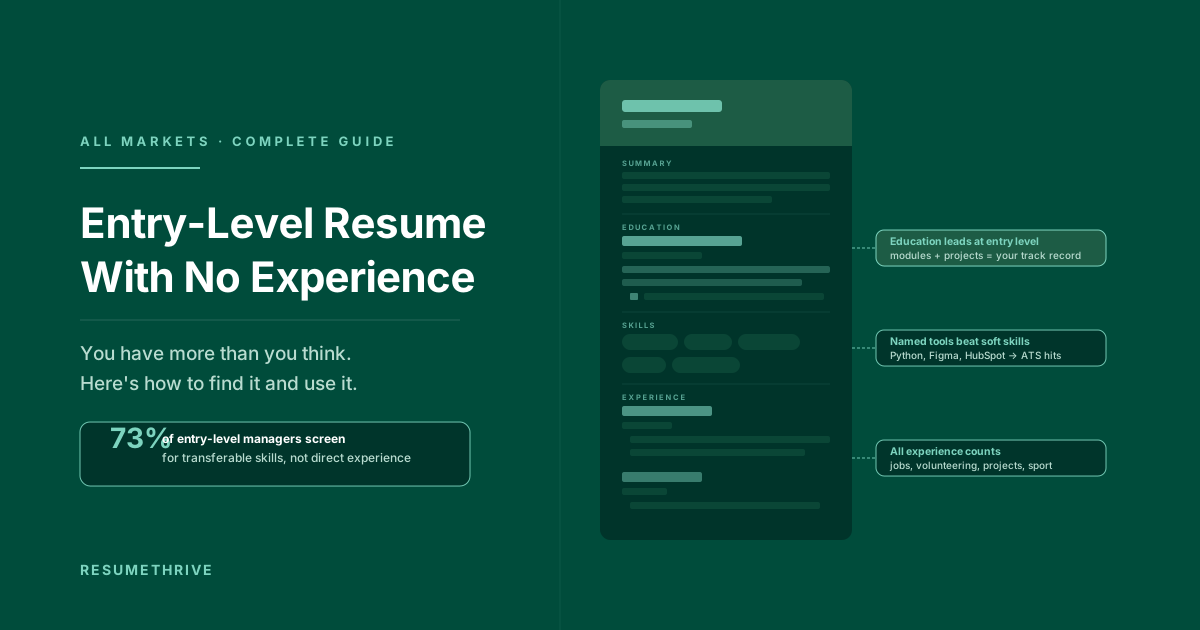
- Entry-level and recent graduates
- Early career (0–5 years)
- Mid-career (5–10 years)
- Career changers
- Most tech roles
- Roles at startups and agencies
Two pages
10+ years
- Senior and director-level roles
- Executive and C-suite positions
- Federal government applications
- Academic and research positions
- Roles with extensive certifications
- Project portfolios with complex scope
17s
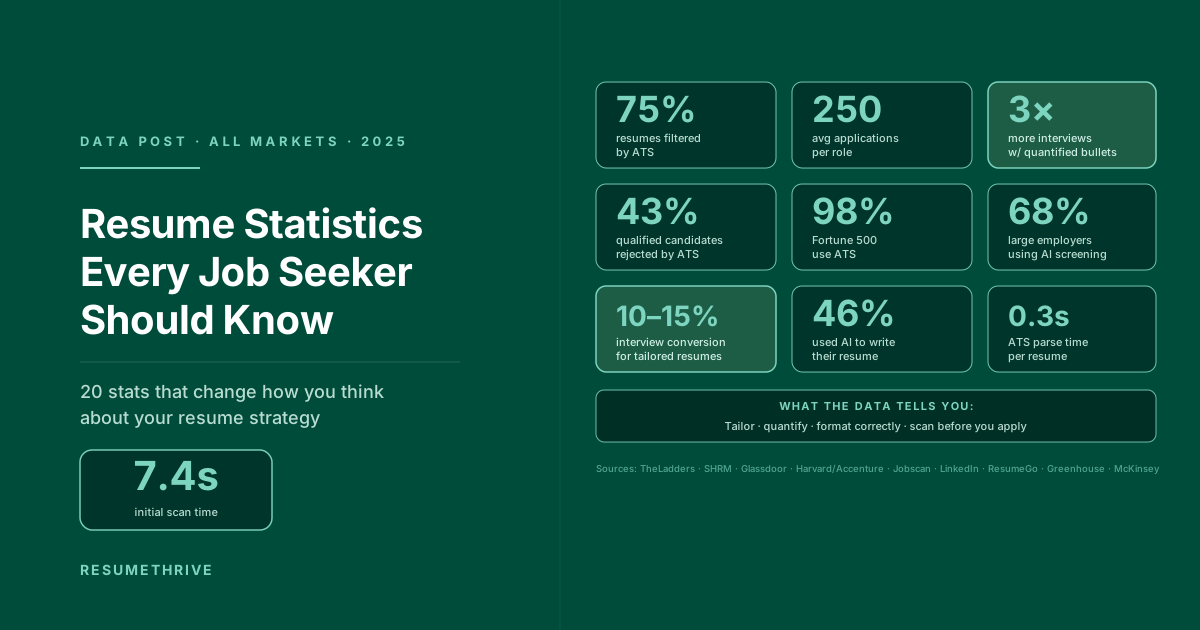
average time a recruiter spends on initial resume review. Whether it's one page or two, the first half of page one determines if they keep reading. Length matters far less than what's on page one.
The full breakdown
What the research and recruiters actually say
| Experience level | Recommended length | Why |
|---|---|---|
| 0–3 years | 1 page | You don't have enough content to justify two pages. Padding it out signals inexperience. |
| 3–7 years | 1 page | Tight, focused one-pagers consistently outperform bloated two-pagers at this level. |
| 7–10 years | 1–2 pages | Depends on the role. Senior IC roles often warrant two pages; manager roles vary. |
| 10–15 years | 2 pages | You have the experience to fill two pages meaningfully. Cutting to one loses context. |
| 15+ years / Executive | 2 pages | Two pages is standard. Three pages is rarely needed and often signals poor editing. |
| Academic / Research | CV format | Academic CVs follow different conventions entirely — length is not constrained. |
| Federal government (USA) | As long as needed | USAJobs applications require detailed entries. Two to five pages is normal. |
Free ATS resume scanner
Is your resume the right length and format?
Our free ATS scanner checks formatting, length, and keyword coverage — and tells you exactly what to fix before your next application.
Get my free ATS score → Free · No sign-up · Results in 60 secondsThe real issue
Length isn't the problem — content density is
Most resume length debates miss the actual issue. Recruiters don't reject resumes because they're two pages. They reject them because the content on those two pages isn't strong enough to justify the read.
A weak two-page resume loses to a strong one-page resume every time. The question isn't "how many pages?" — it's "does every line earn its space?"
-
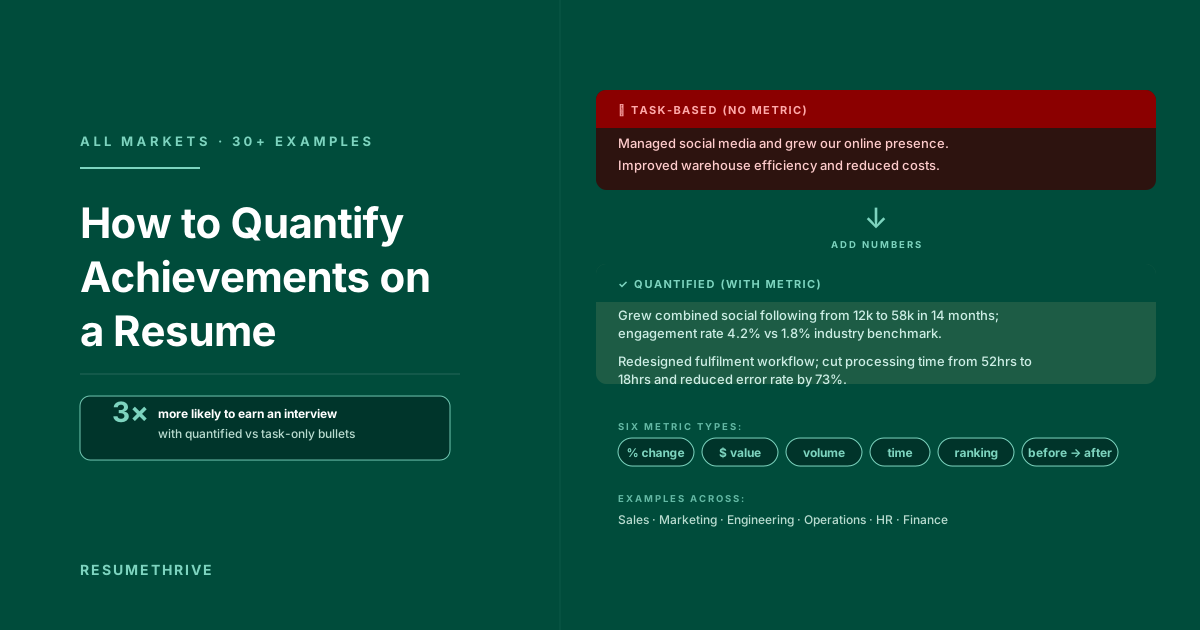
Every bullet point should include a result
"Managed social media accounts" is padding. "Grew Instagram following from 4K to 28K in 8 months through organic content strategy" earns its line. If a bullet doesn't have a result or a metric, it's a candidate for deletion — not expansion.
-
Old experience should shrink, not stay equal
Jobs from more than 10 years ago should take up far less space than recent roles. A 2-line summary per position is enough for older work history. Your most recent 3–5 years should dominate the page.
-
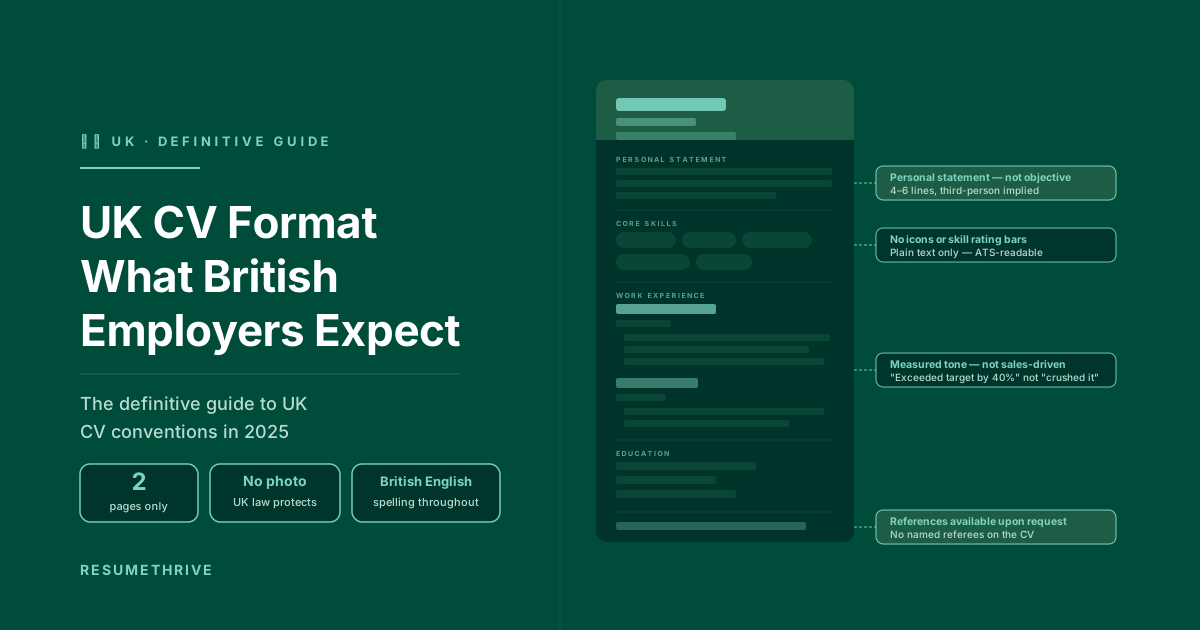
An objective statement wastes your most valuable space
The top of page one is the most-read section of your resume. An objective statement ("Seeking a challenging role where I can grow…") burns that prime real estate on generic content. Replace it with a professional summary that leads with your strongest credential.
-
References and "available upon request" add nothing
Recruiters know references exist. Stating this takes up a line (or more) that could be spent on a metric or a skill. Remove it entirely.
What to cut
If your resume is too long — cut these first
Jobs older than 15 years. Unless directly relevant to the role, work history beyond 15 years rarely helps and often dates you. List company, title, and dates only — no bullet points.
High school education. Once you have a degree or significant work experience, high school education should be removed entirely.
Duties instead of achievements. "Responsible for managing a team of 5" is a duty. "Led a team of 5 to deliver a $1.2M project 3 weeks ahead of schedule" is an achievement. Every duty-based bullet is a conversion opportunity — or a cut.
Redundant skills. "Microsoft Office" is no longer a differentiating skill in 2025. Unless you're applying for an administrative role where advanced Excel is a specific requirement, it takes up space without adding score.
Once you've trimmed your resume, run it through our free ATS scanner to confirm it's ready.
Scan my resume free →Market differences
Does this change by country?
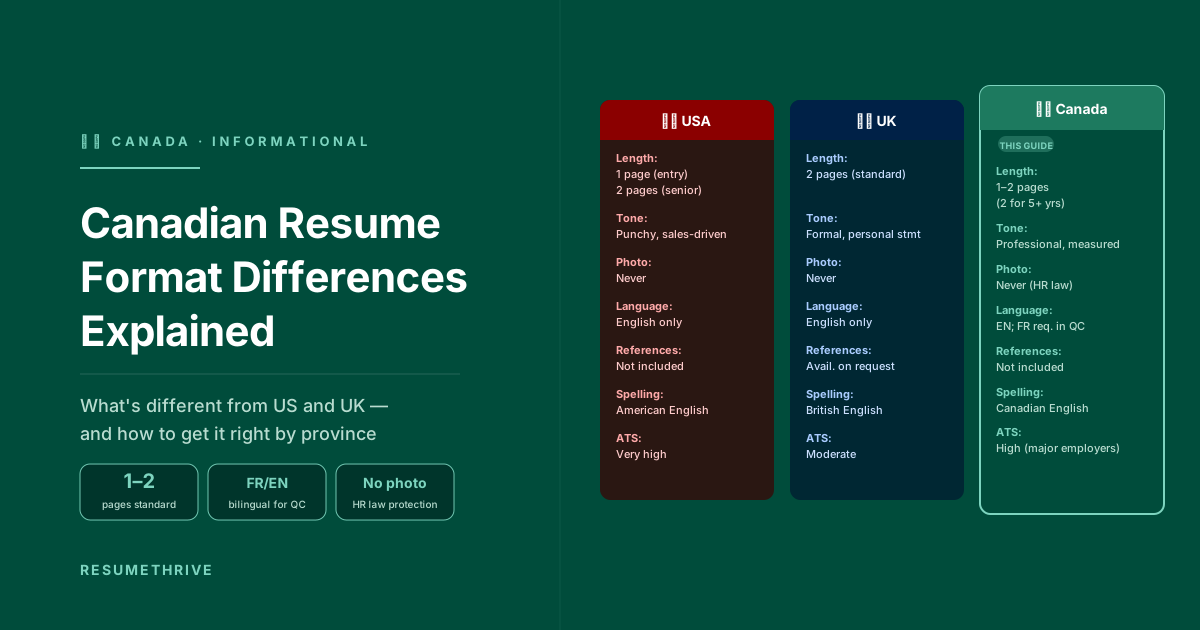
USA and Canada: One to two pages, following the experience-level guide above. Anything beyond two pages is unusual unless you're in academia or government.
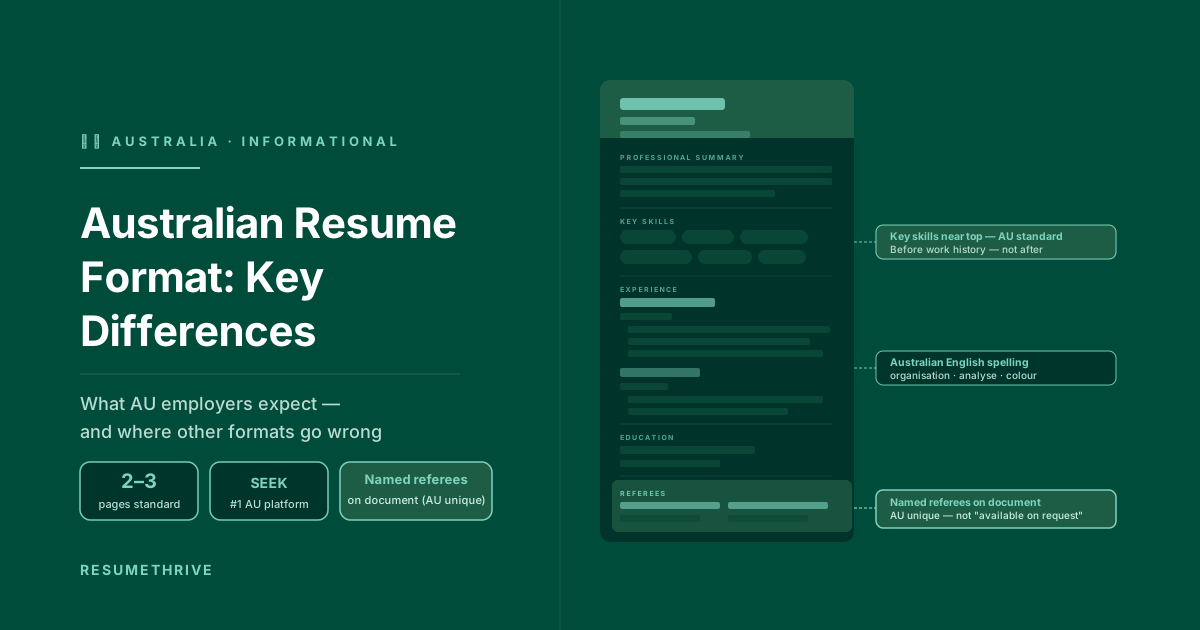
UK and Australia: Two pages is the standard expectation regardless of experience level. A one-page resume can read as under-prepared in these markets. CV is the preferred term in the UK.
New Zealand: Similar to Australia — two pages is the norm. Lead with a strong personal profile at the top.
All markets: The ATS scoring rules are the same everywhere. A well-formatted, keyword-rich resume on the correct number of pages is what passes the filter in every country.
Before you apply
Resume length checklist
Confirm before every submission
- Under 10 years' experience — resume is one page
- Over 10 years — resume is two pages maximum
- Every bullet point includes a result or metric, not just a duty
- Work history older than 10 years is condensed to title, company, dates only
- No objective statement — replaced with a focused professional summary
- No "references available upon request" line
- High school education removed if degree or significant experience exists
- Run resume through ATS scanner to check formatting and keyword score
One last step
Make sure your resume passes ATS before you apply
Our free scanner checks length, formatting, and keyword coverage — and shows you exactly what to fix in under 60 seconds.
Get my free ATS score → Free · No sign-up · Instant results